


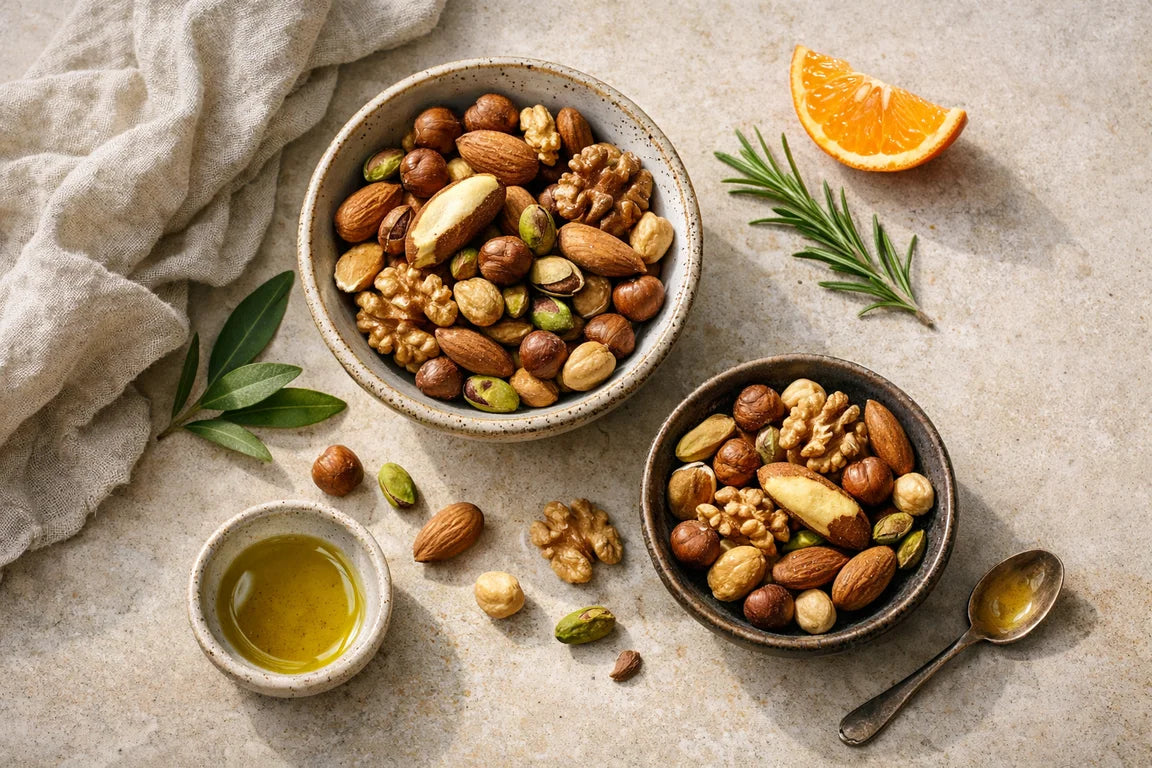
Nuts are much more than a delicious and crunchy snack: they are one of the most valuable natural sources of antioxidants in the Mediterranean diet . At Nutnut, we like to think of them as concentrated little "shields" that help your body defend itself against everyday stressors: pollution, poor sleep, or demanding workouts.
What do we mean by antioxidants?
When we talk about antioxidant properties, we're referring to the ability of certain nutrients to neutralize free radicals, those unstable molecules that damage cells and accelerate aging. In another article, we explained what oxidative damage is and how it relates to cardiovascular problems, chronic inflammation, and cognitive decline. Nuts fit perfectly into the strategy to combat this damage because they concentrate several key antioxidants in an easy-to-consume format: a handful a day.
It's not just about an isolated "vitamin." Nuts contain a veritable antioxidant powerhouse: vitamin E (in the form of tocopherols), phenolic compounds like resveratrol, minerals such as selenium, and carotenoids like lutein and zeaxanthin. We've already explored many of these nutrients in individual articles (such as those dedicated to vitamin E, tocopherol, and selenium), and here we've brought them together to show their combined impact.
Vitamin E: the classic that never fails
If there's one star antioxidant in nuts, it's vitamin E. This fat-soluble vitamin protects your cell membranes from the oxidation of their fats. In other words, it helps prevent lipids from becoming rancid in your body, which is especially important considering that many nuts are rich in unsaturated fatty acids.
At Nutnut, we've discussed tocopherol, the most active form of vitamin E found in nuts like almonds and hazelnuts. A daily serving of about 30g of these nuts can significantly contribute to meeting your vitamin E needs, especially if you combine several varieties. This vitamin is associated with reduced LDL cholesterol oxidation, improved cardiovascular health, and visible skin benefits, making it a perfect ally if you're looking to take care of your health "from the inside out."
Polyphenols and resveratrol: more than just a fad
In addition to vitamin E, many nuts contain polyphenols, a large family of plant-based compounds with potent antioxidant and anti-inflammatory effects. At Nutnut, we've already dedicated a specific article to nuts rich in resveratrol, a polyphenol known for its presence in grapes and red wine, but which also appears in some varieties of nuts, especially walnuts.
These polyphenols not only neutralize free radicals directly, but also modulate signaling pathways in your cells associated with inflammation, stress, and longevity. Some have been shown to activate cellular repair mechanisms and improve mitochondrial function, which aligns perfectly with the idea of using nuts as a tool for healthier aging. When you combine walnuts with other nuts rich in vitamin E, you're unknowingly creating a very interesting antioxidant synergy.
The role of selenium and other minerals
Among the minerals with antioxidant properties, selenium deserves its own section. At Nutnut, we've already explained its benefits and how to consume it, and if you recall, Brazil nuts are one of the star sources in this regard. Just a few nuts a day can easily meet the daily recommended intake of selenium, provided it's consumed responsibly.
Selenium is part of important enzymes like glutathione peroxidase, which acts as one of the body's main defenses against oxidative stress. Combined with vitamin E, it creates a highly effective protective network. Including 1–3 Brazil nuts in your usual mix of nuts can make a difference to your antioxidant status without the need for supplements.
How they help against oxidative damage
If we put all of the above together, it becomes clearer why we talk about the "antioxidant properties" of nuts and not just "individual nutrients." On the one hand, they provide molecules that neutralize free radicals before they can damage your cells. On the other, they strengthen your own internal defense systems, such as antioxidant enzymes. And, moreover, they do so within a matrix rich in healthy fats, plant protein, and fiber.
In practice, this translates to less lipid oxidation in the blood, reduced low-grade inflammation, and better protection of sensitive tissues such as the cardiovascular and nervous systems. It makes sense that, in studies of the Mediterranean diet, regular nut consumption is associated with a lower risk of cardiovascular disease and improved cognitive function over time. At Nutnut, we maintain that the effect doesn't come from a single "super nutrient," but from the combination of all the nutrients.
Roasting, flavor and preservation of antioxidants
A very common question we receive is whether roasting causes nuts to lose all their antioxidant properties. At Nutnut, we've discussed why we roast nuts, the Maillard reaction, and whether the properties are retained after roasting. The bottom line is that, when the process is done carefully, you don't have to sacrifice antioxidant value.
A gentle, controlled roasting process, like the one we use in artisanal methods, enhances flavor and texture without subjecting the nuts to extreme temperatures for too long. This helps preserve a significant portion of the vitamin E and phenolic compounds. Furthermore, proper roasting reduces moisture and improves shelf life, which also protects fatty acids from oxidation. That's why we emphasize the difference between careful roasting and an industrial product subjected to more aggressive processes.
Fruit by fruit: antioxidant strengths
Without turning it into an endless list of numbers, it's helpful to keep in mind the antioxidant "strength" of each nut:
-
Almonds are notable for their vitamin E content, making them an excellent base for any blend that seeks to strengthen protection against oxidative damage to fats.
-
Walnuts combine plant-based omega-3s with polyphenols such as resveratrol, making them especially interesting when the goal is to take care of the heart and brain.
-
Hazelnuts also provide vitamin E and phenolic compounds, and fit very well into creams and gourmet preparations without losing their antioxidant value.
-
Pistachios also contain antioxidants, carotenoids such as lutein and zeaxanthin, which have been linked to eye protection, something very relevant in a life full of screens.
At Nutnut, we like to suggest blends that combine these profiles, rather than focusing solely on one type of nut, precisely to take advantage of the complementarity of their antioxidants.
How to incorporate them into your daily life
The antioxidant properties of nuts only translate into real benefits with consistency. There's no need to overcomplicate things: a handful of nuts a day, around 25–30 g, can be enough as part of a balanced diet. You can add them to your breakfast (with yogurt or fruit), take them as a snack between meals, sprinkle them on top of a vegetable soup, or use them as a crunchy topping on your dishes.
In other articles, we've discussed how nuts fit into athletic performance , children's nutrition, and the Mediterranean diet. Here, the message is the same, but with a focus on their antioxidants: every time you choose a quality nut snack, without added sugars or unnecessary coatings, you're giving your body a little boost against daily wear and tear. And if you also opt for artisanal processes and careful roasting, you ensure that this boost arrives in its best form, with flavor, texture, and the maximum possible antioxidant protection.




Leave a comment
This site is protected by hCaptcha and the hCaptcha Privacy Policy and Terms of Service apply.