


If you've landed here looking for information on histamine and nuts, you're probably here for one of two very different reasons: because you've heard about histamine intolerance and want to know whether you should moderate your intake, or because you've mixed this topic up with histidine, the essential amino acid we covered in another article. At nutnut we think the difference is worth clearing up properly, because they're two related but not identical things, and the confusion between them generates a fair amount of misinformation.
This article is not a substitute for assessment by an allergist, a gastroenterologist or a specialist dietitian: only a professional can confirm it, through clinical history and, where appropriate, specific tests. What we do want to do is explain rigorously what histamine really is, where it comes from, and what part nuts play — or don't play — in the whole story.
Nut allergy, which we'll cover in detail in a separate article, is an immune mechanism mediated by IgE antibodies. Histamine intolerance is a different, non-immune phenomenon, and it's best not to mix the two concepts even though they sometimes share a symptom or two.
What histamine is and what it does in the body
Histamine is a biogenic amine that your own body produces and uses constantly for completely normal functions: it's involved in the immune response, it regulates gastric acid secretion during digestion, it acts as a neurotransmitter in the central nervous system and it takes part in the sleep-wake cycle. It isn't a harmful substance in itself; the problem appears when it builds up in amounts greater than the body is able to metabolise.
Most of the body's histamine is stored in mast cells, immune system cells that release it en masse when they detect a genuine threat — as in an allergic reaction — or, in some people, in response to stimuli that shouldn't trigger that response at all.
Histamine vs. histidine: why they aren't the same thing
It's very easy to confuse the two terms, because they sound almost identical and they are related, but they're not interchangeable. Histidine is an essential amino acid: a building block the body uses to make proteins and has to obtain from the diet, found naturally in almonds, pistachios, cashews and peanuts, among other nuts.
Histamine, on the other hand, isn't an amino acid but the molecule histidine turns into when an enzyme called histidine decarboxylase removes a carboxyl group from it. This process happens mainly inside the body's own cells (in mast cells), but it can also happen outside the body, through the action of certain bacteria, during the fermentation or ageing of certain foods. Eating a food rich in histidine is not the same as "eating histamine": these are different biochemical processes, separated by an enzymatic transformation that doesn't occur to any meaningful degree in a fresh nut.
Do nuts contain histamine?
Here's the most important nuance in the whole article: nuts as such are not a food that naturally accumulates histamine. Histamine forms above all in foods that go through fermentation, curing or prolonged ageing — aged cheeses, fermented cured meats, wine, vinegar, sauerkraut — because it's precisely those processes that give bacteria the time and the conditions to turn histidine into histamine. A roasted nut neither ferments nor ages in that way, so its direct histamine content is, under normal conditions, minimal.
What does happen is that some clinical guidelines aimed at people with histamine intolerance classify certain nuts — walnuts and cashews especially — as "histamine-releasing" foods: not because they contain it, but because in some sensitive people they appear to stimulate the release of the histamine the body already has stored in its mast cells. The scientific evidence behind these lists is limited and doesn't always agree from one source to the next, so they're best taken as a rough guide rather than as absolute truth.
Histamine intolerance: what it is and how it differs from an allergy
Histamine intolerance occurs when the body can't break down the histamine it ingests or produces efficiently enough, generally because of reduced activity of the enzyme diamine oxidase (DAO), which is responsible for metabolising it in the gut. Because it isn't broken down at a good rate, histamine accumulates and can produce symptoms similar to those of an allergy: headache, skin flushing, digestive discomfort, nasal congestion or a racing heartbeat.
The key difference from a food allergy is that histamine intolerance is not mediated by the immune system or by IgE antibodies, but by a problem with metabolism. That explains why someone with histamine intolerance can react differently depending on the total amount of histamine built up in their body at a given moment, something that doesn't happen with a classic allergy.
Nuts and a low-histamine diet: what to bear in mind
If you suspect you have histamine intolerance, the first step is to confirm it with a professional, because a poorly designed restrictive diet can limit your eating unnecessarily. That said, here are some general pointers that tend to be used in this context:
Almonds and hazelnuts are generally considered safer options within a low-histamine diet, always in their natural form and without additional processing.
Walnuts and cashews appear more often on lists of "releasing" foods, so some sensitive people prefer to introduce them cautiously and observe their own individual tolerance.
Freshness matters: a rancid or badly stored nut doesn't accumulate histamine for that reason, but it can generate other compounds derived from the oxidation of its fats that are equally undesirable. Keeping them in an airtight container, protected from light and heat, is good practice whether or not you follow a low-histamine diet.
How to apply all this day to day
For the vast majority of people, who have neither histamine intolerance nor a nut allergy, this distinction is above all a nutritional curiosity: the histamine everyone talks about doesn't reach your body through a handful of almonds or cashews — it's generated and regulated internally.
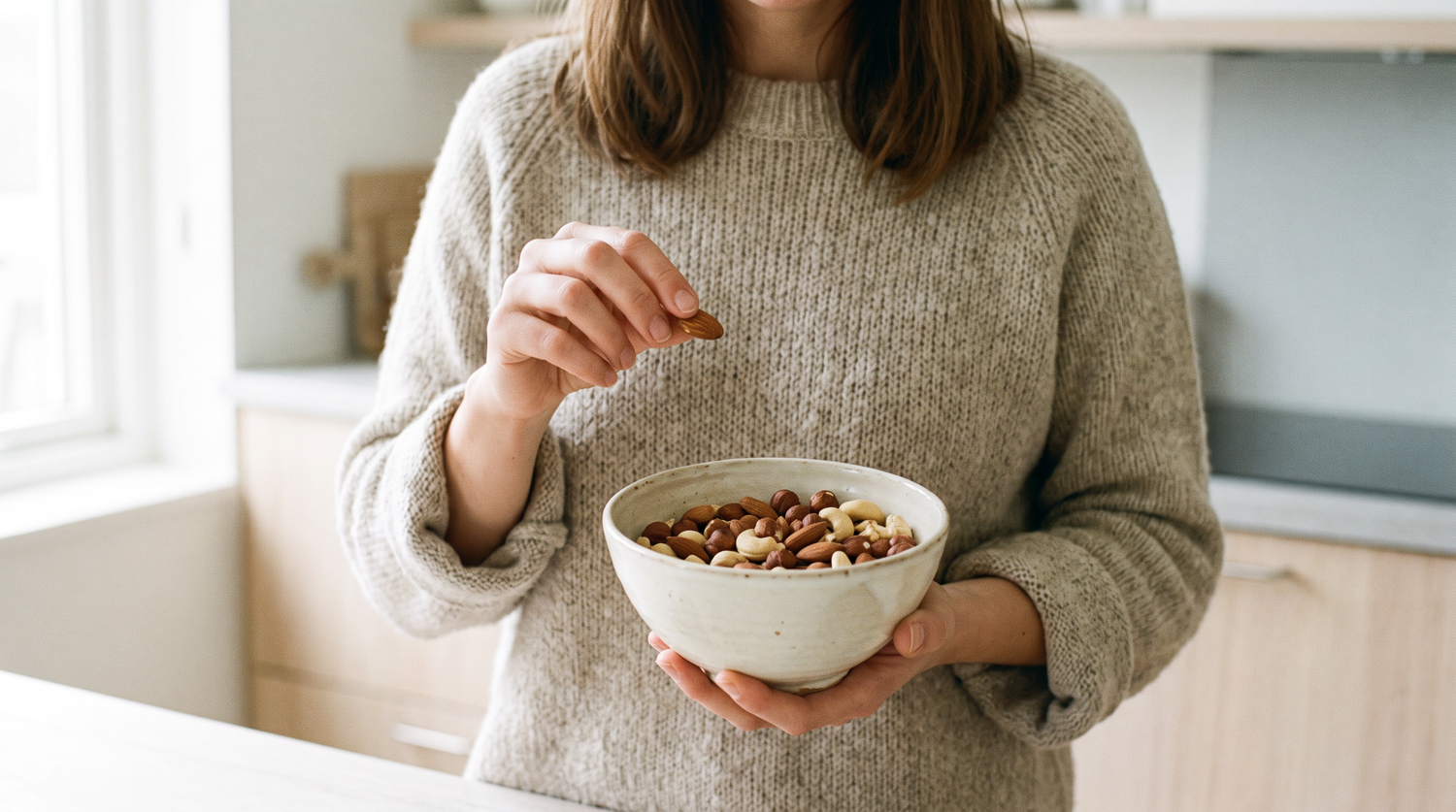
Breakfast: natural almonds together with a plant-based drink, a combination that's well tolerated in most low-histamine diet protocols.
Mid-morning snack: hazelnuts or macadamias, two of the options most frequently recommended as safe.
If you suspect an intolerance: introduce any new nut in small amounts and note how it makes you feel, and consult a professional before cutting out entire food groups on your own.
At nutnut we take care over our small-batch artisan roasting precisely in order to preserve the freshness of every variety — a factor that, beyond any debate about histamine, always works in favour of the nutritional quality of the product that reaches your table.


Leave a comment
This site is protected by hCaptcha and the hCaptcha Privacy Policy and Terms of Service apply.