


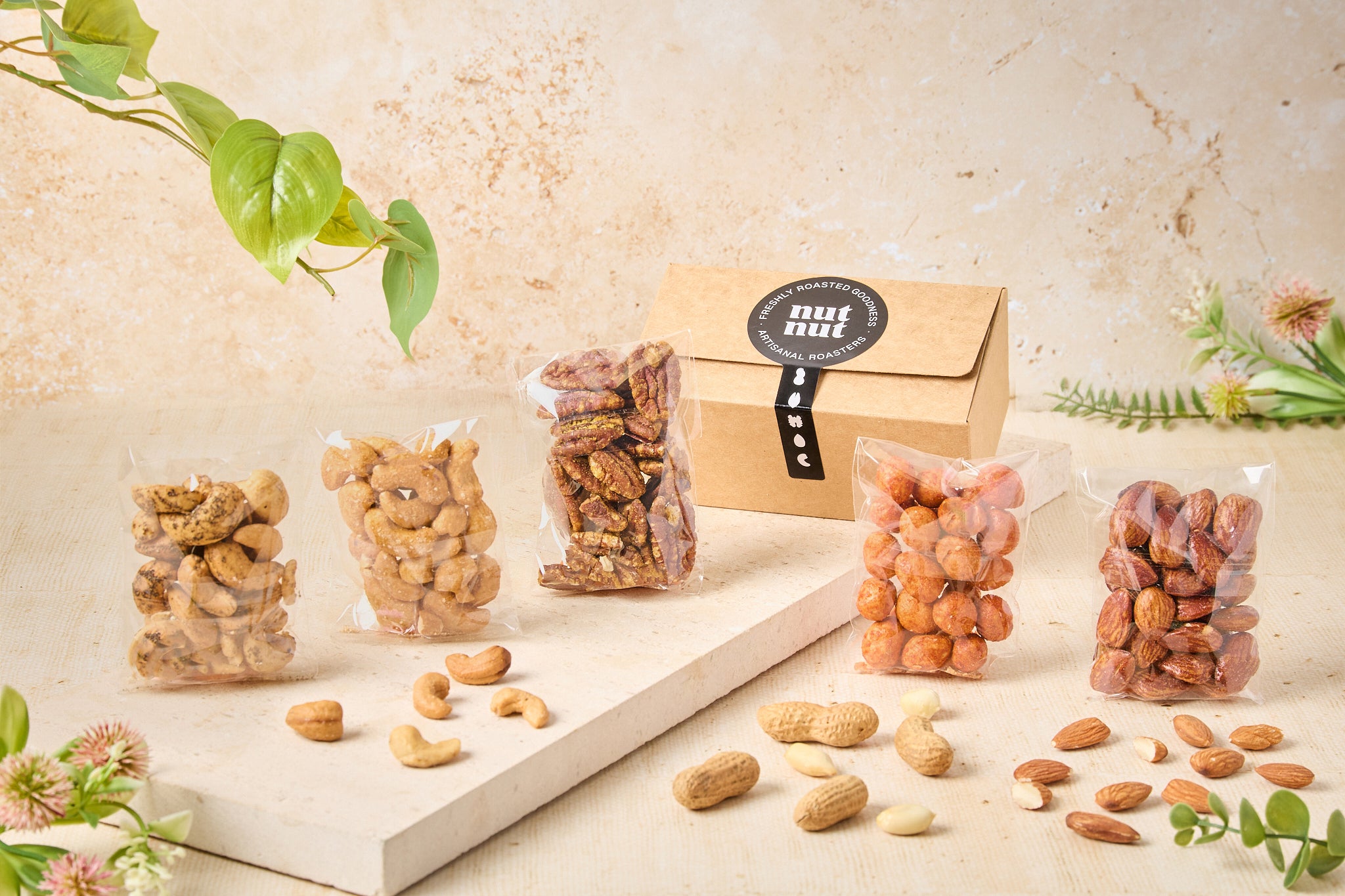
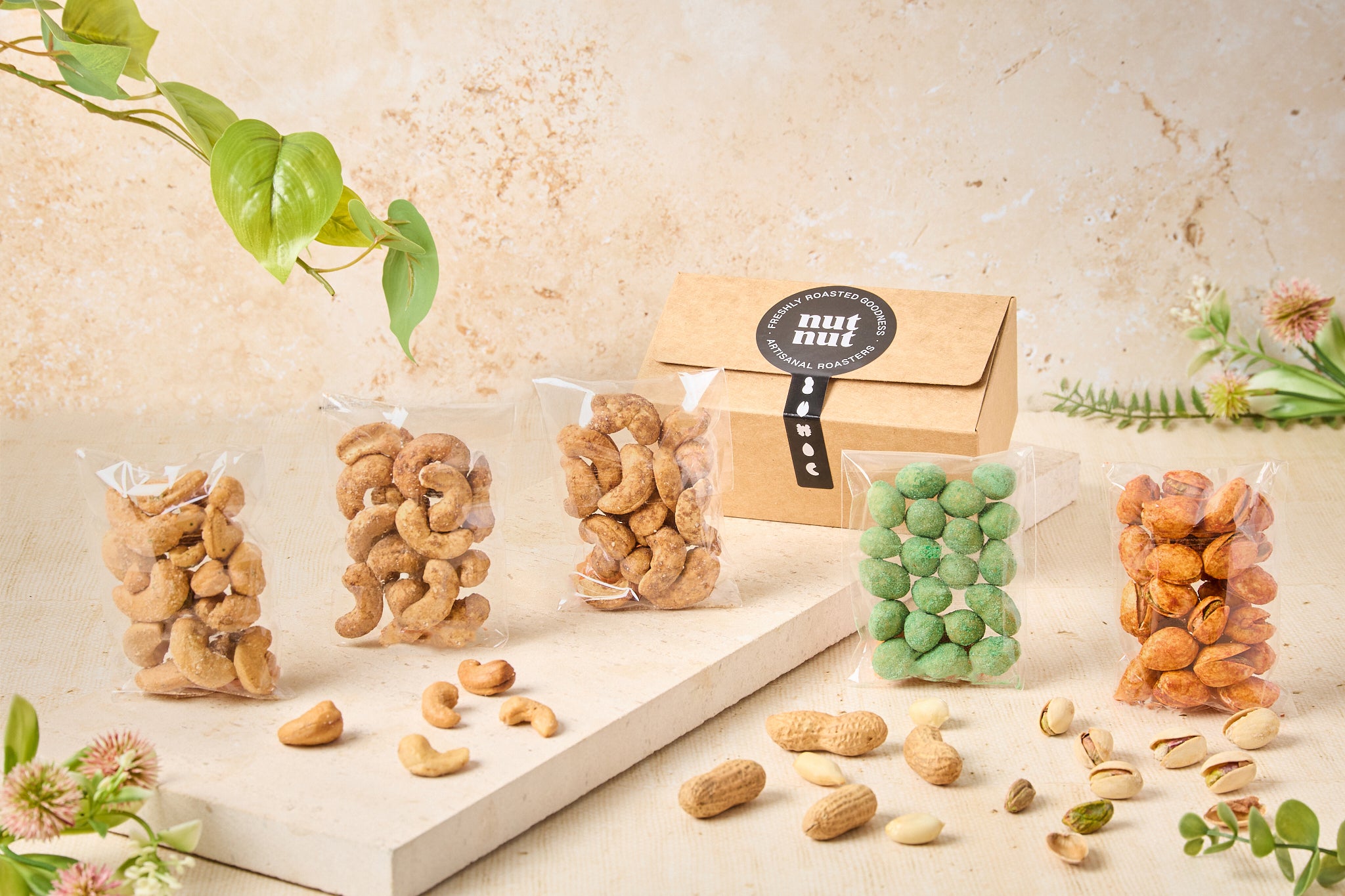
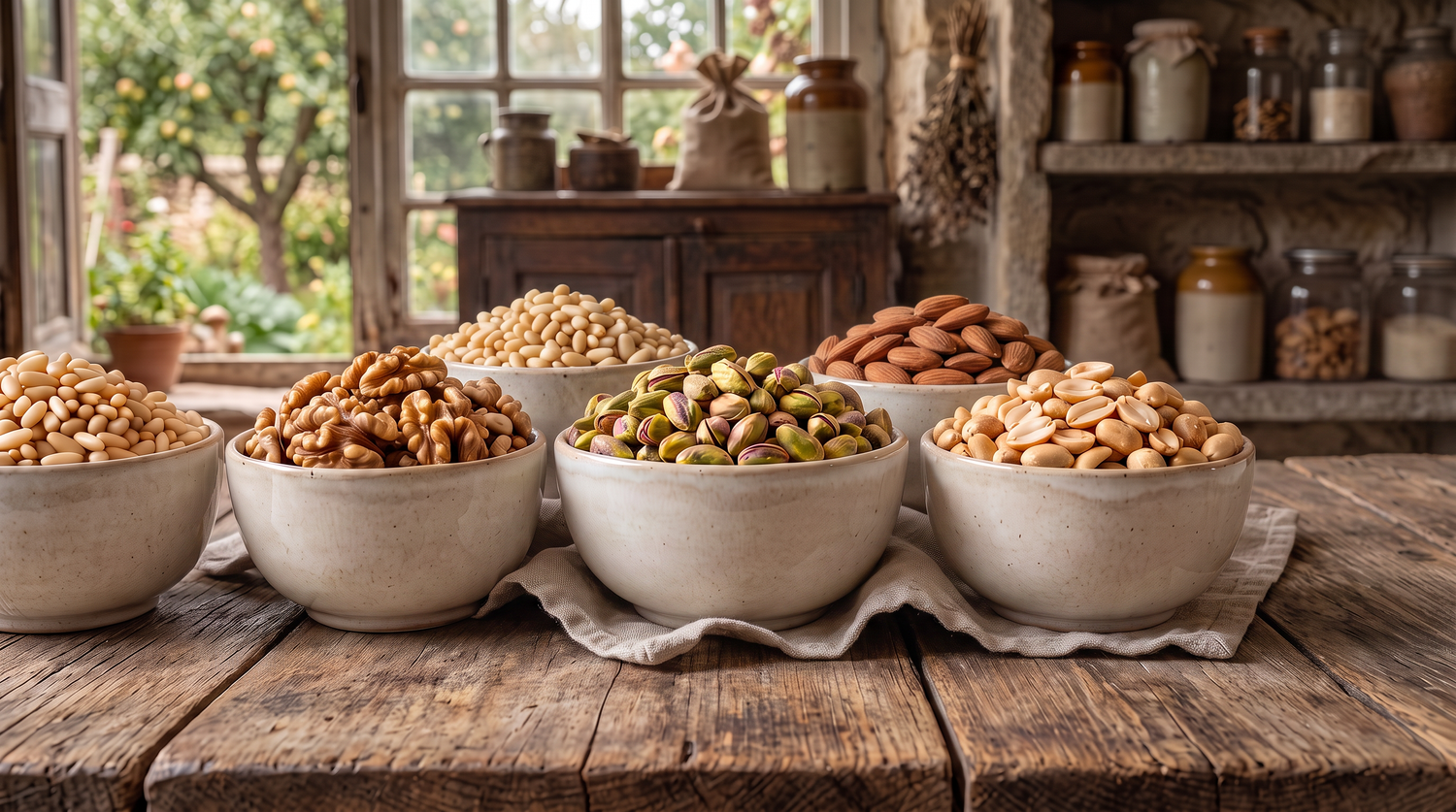
For most people, a handful of nuts means energy, flavour and health. For others, it is one of the most common — and potentially most serious — food allergens there is. At nutnut we work every day with almonds, cashews, hazelnuts, walnuts, pistachios and peanuts, and we know that being transparent about what goes into every bag matters just as much as the quality of the roast.
Nut allergy is neither rare nor minor: it is one of the most frequent causes of severe food-related allergic reactions, and its prevalence has risen steadily over recent decades, particularly among children. Understanding it properly — what triggers it, how it presents and why some nuts cross-react with others — helps both those who live with it and those who simply want to enjoy nuts with a better sense of what they are eating.
This article is not intended to replace an allergist or to provide a diagnosis: only a professional can confirm one through specific testing. What we do want to do is clear up the confusion surrounding terms such as "cross-reactivity" and "allergen", and explain, rigorously, what science and European regulations have to say about it.
It is worth starting with a distinction that is very often overlooked: not all "nuts" are botanically the same, and that difference matters far more than it might seem when talking about allergies.
What a food allergy is and why it happens with nuts
A food allergy is an exaggerated response by the immune system to a protein that, under normal circumstances, is harmless. In the case of nuts, the immune system mistakenly identifies certain storage proteins — mainly 2S albumins, vicilins and legumins — as a threat, and produces specific IgE antibodies against them.
The first time this happens there are usually no visible symptoms; it is on subsequent exposures that those antibodies, now already present, trigger the release of histamine and other mediators responsible for the symptoms associated with an allergic reaction. This mechanism is essentially the same for any food allergy; only the protein involved changes.
Peanuts and tree nuts: two allergies that get grouped together but are not the same
People commonly read "nuts" and automatically think of peanuts, but botanically the peanut is a legume, not a tree nut. It belongs to the Fabaceae family, alongside lentils and chickpeas, while almonds, walnuts, cashews, pistachios and hazelnuts belong to entirely different botanical families.
This is not an academic detail: European food safety regulations treat peanuts and tree nuts as two separate allergen categories, each subject to its own mandatory declaration. In clinical practice, however, it is common for someone allergic to peanuts to also react to a tree nut, and vice versa, which explains why the two terms end up being mixed together in everyday language.
Symptoms of nut allergy: from mild itching to anaphylaxis
Symptoms vary enormously from one person to another, and also from one exposure to the next, which makes this allergy particularly unpredictable.
At the mildest end, there may be itching or tingling in the mouth and throat, localised hives, slight swelling of the lips or eyelids, or digestive discomfort such as nausea or abdominal pain.
At the most severe end, anaphylaxis may occur: a systemic reaction involving difficulty breathing, swelling of the throat and a sudden drop in blood pressure which, if not treated immediately with adrenaline and urgent medical care, can be fatal.
One important point: the severity of a previous reaction does not predict the severity of the next one. That is why any suspected nut allergy should be assessed by an allergist through skin or blood testing, never by simply observing mild symptoms at home.
Cross-reactivity between nuts: what it means and why it happens
Cross-reactivity occurs when the immune system, having become sensitised to a particular protein, also reacts to very similar proteins present in other foods, even when there has been no previous exposure to them. This explains why many people allergic to one nut end up avoiding several others as a precaution, even though a clinically confirmed allergy to all of them does not always exist.
This reactivity tends to follow botanical families:
| Botanical family | Nuts it covers | Clinical relevance |
|---|---|---|
| Anacardiaceae | Cashew, pistachio | Cross-reactivity between the two is frequent |
| Juglandaceae | Walnut, pecan | Share much of their protein profile |
| Betulaceae | Hazelnut | Cross-reacts with birch pollen (see oral allergy syndrome) |
| Rosaceae | Almond | Cross-reacts with stone fruits (peach, apple) via LTP proteins |
| Fabaceae | Peanut | A different family from tree nuts, although the two frequently coexist in clinical practice |
Oral allergy syndrome: when pollen and nuts cross paths
Beyond cross-reactivity between nuts, there is another well-documented phenomenon: oral allergy syndrome, also known as pollen-food syndrome. It occurs in people who are allergic to pollen — often birch pollen — and who experience itching in the mouth when eating raw almonds or hazelnuts, because these share structural proteins with that pollen. Interestingly, this type of reaction tends to ease or disappear when the nut is roasted, as heat alters the structure of the protein responsible.
How allergens are labelled in Spain and the European Union
Regulation (EU) No 1169/2011 requires 14 allergens to be declared clearly and prominently. These include, as separate categories, "nuts" (almond, hazelnut, walnut, cashew, pecan, Brazil nut, pistachio, macadamia or Queensland nut) and "peanuts". In addition, many manufacturers include "may contain traces of" statements to warn of possible cross-contamination during processing — something particularly relevant when different nuts are roasted or packed in the same facilities.
At nutnut we handle this labelling with the same level of care we apply to our roasting: if you have a diagnosed allergy, always check the product page and the packaging before buying.
What to do depending on your situation
If you have a confirmed diagnosis of an allergy to a particular nut, the safest approach is to avoid it completely, carry the emergency medication your doctor has prescribed and read every label, even on products you have bought before, because formulations can change.
If you do not have an allergy but are concerned about possible cross-reactivity because of family history or a pollen allergy, discuss it with your allergist before introducing a new nut, particularly with children.
If none of the above applies to you, nuts remain one of the most complete snacks there is: a handful of almonds mid-morning, a mix of walnuts and hazelnuts after training, or a few pistachios with dinner are simple ways to enjoy their benefits, with no more thought than you would give any other food.
At nutnut we roast every variety in small batches, dry and with no added oils, precisely so you can trust what is inside every bag: just nuts, salt and the flavour that comes from a well-made artisan roast.



Leave a comment
This site is protected by hCaptcha and the hCaptcha Privacy Policy and Terms of Service apply.