




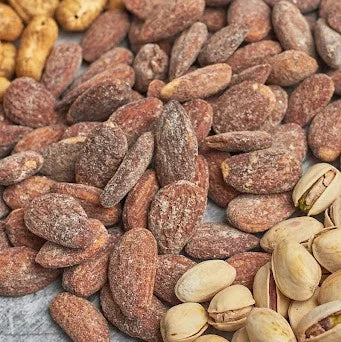
Which nutrients are best preserved after roasting?
Roasting nuts can affect their nutritional profile, but many nutrients are well preserved and can even become more bioavailable. In this article, we will explore the properties of roasted nuts:
Nutrients that are well preserved or improved by roasting
Proteins
The protein content in nuts is barely affected by roasting. Their structure may change slightly, but they remain an excellent source of plant-based protein.
Healthy fats
Although heat can degrade some unsaturated fatty acids, roasted nuts still maintain a high content of healthy fats (monounsaturated and polyunsaturated), essential for cardiovascular health.
Minerals (magnesium, phosphorus, potassium, zinc, iron, calcium)
Minerals are heat-stable, so roasting does not significantly reduce their content. Nuts remain a great source of these essential micronutrients.
Fiber
Dietary fiber, crucial for digestion and gut health, remains intact after roasting.
Nutrients that may be affected
Heat-sensitive vitamins (Vitamin C, some B vitamins)
Vitamin C is almost nonexistent in nuts, but some B vitamins, such as B1 (thiamine), can degrade with heat.
Antioxidants and polyphenols
Some antioxidants may be reduced by roasting, but in certain cases (such as in almonds and hazelnuts), the process can improve the availability of beneficial compounds, such as tocopherols (vitamin E).
What percentage of nutrients is lost in the process?
The percentage of nutrient loss during nut roasting varies depending on the type of nut, temperature, and roasting time.

How does roasting affect natural oils?
Roasting affects the natural oils in nuts in three main ways: oxidation, fatty acid structure, and flavor/aroma.
1. Oil oxidation
Nuts contain a high amount of unsaturated fats, which are more susceptible to oxidation when exposed to heat. However, if roasting is done correctly (at moderate temperatures and without prolonged oxygen exposure), oxidation is minimal.
- Low to moderate temperatures (120-150°C): Little to no oxidation.
- High temperatures (>160°C) or prolonged times: Higher risk of oxidation and formation of undesirable compounds, which can affect product quality.
2. Changes in fatty acid structure
- Monounsaturated fatty acids (such as oleic in almonds and hazelnuts): These are quite stable and resist heat well.
- Polyunsaturated fatty acids (such as omega-3 in walnuts): These are more heat-sensitive and can partially degrade.
3. Flavor and aroma
Roasting enhances flavor by producing Maillard reactions, which generate aromatic compounds and improve the taste of nuts. It can also cause natural oils to be released more, resulting in a crispier texture and a more intense flavor.
Are there nutritional differences between raw and roasted?
Yes, there are some nutritional differences between raw and roasted nuts, although they generally remain highly nutritious in both cases.
Which antioxidants remain after roasting?
The antioxidants present in nuts can be affected by roasting, but some are maintained or even increase their bioavailability.
Antioxidants that remain after roasting:
Polyphenols:
Although they can partially degrade at very high temperatures, in some nuts (like almonds and hazelnuts), roasting can increase their bioavailability, making them better absorbed by the body.
Phenolic compounds:
In nuts like walnuts, almonds, and hazelnuts, the levels of these compounds can remain stable or even increase after moderate roasting.
Tocopherols (Vitamin E)
They remain relatively stable in nuts like almonds and hazelnuts, although they can be reduced if the roasting is very intense.
Antioxidants that can degrade:
Vitamin C:
Practically disappears with heat, but it is not a relevant antioxidant in nuts.
Carotenoids:
They can degrade to some extent if roasting is prolonged or at high temperatures.
How does roasting affect the preservation of nuts?
Roasting affects the preservation of nuts in several ways, both positive and negative:
Benefits of roasting for preservation:
✅ Lower moisture content → Heat reduces the moisture in nuts, which hinders the growth of fungi and bacteria, increasing their shelf life.
✅ Greater microbiological stability → Heat destroys microorganisms present on the surface.
✅ Greater flavor intensity and crunchy texture → Can make nuts more appealing to consumers and less prone to becoming soft over time.
Disadvantages of roasting for preservation:
❌ Increased susceptibility to rancidity → Natural oils become more exposed to oxygen, which accelerates oxidation and rancidity, especially in nuts rich in unsaturated fats, like walnuts.
❌ Loss of protective antioxidants → Some antioxidants that protect natural oils can degrade, increasing the possibility of oxidation.
❌ Increased sensitivity to light and air → Without the natural protective layer of the skin, in nuts like almonds or hazelnuts, oils oxidize faster.
Recommendations for improving the preservation of roasted nuts:
We invite you to read our article about “How to keep your nuts in perfect condition” to enjoy your nuts in their optimal state from first to last. Anyway, here are some basic tips to keep in mind:
- Store in airtight containers to reduce contact with oxygen.
- Avoid exposure to light and heat to slow down oxidation.
- Prefer opaque or vacuum-sealed containers to maintain freshness longer.
- Store in a cool, dry place, or even in the refrigerator.



Leave a comment
This site is protected by hCaptcha and the hCaptcha Privacy Policy and Terms of Service apply.