

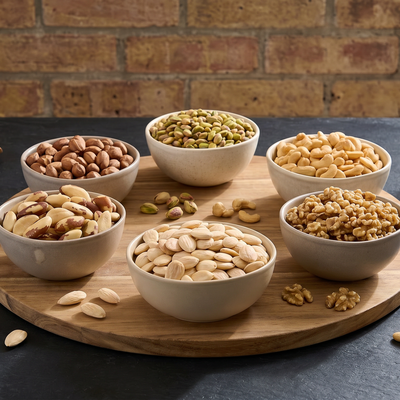
Phenylalanine is one of the nine essential amino acids that the body cannot produce on its own, and although its name may sound less familiar than that of leucine or lysine, its role is crucial: the production of the neurotransmitters that regulate your mood, concentration, and energy depends largely on it. At nutnut, we find it in virtually all the nuts in our selection, though in varying amounts depending on the variety, with peanuts as the undisputed star and pistachios rounding out a range full of nuances.
If you’ve already read our articles on leucine in nuts or on the BCAAs found in nuts, you’ll know that each essential amino acid has a very specific function within the body. Phenylalanine stands out as the building block of tyrosine—and, through it, of several of the most important molecules for your nervous system.
Unlike lysine, which focuses on protein structure, or methionine, which is involved in detoxification, phenylalanine has a more neurological and hormonal profile. Knowing which nuts are richest in it helps you make the most of it in your daily diet, without the need for supplements.
What is phenylalanine, and why is it essential?
Phenylalanine is an aromatic amino acid, which means its chemical structure includes a benzene ring. This characteristic makes it unique among the essential amino acids and explains why the body uses it as a starting point to synthesize other molecules with the same aromatic base.
There are two forms: L-phenylalanine, which is used to build proteins and is found in foods, and D-phenylalanine, a less common form that is of some interest in research on pain perception. When we talk about phenylalanine in nuts, we are always referring to the L-form, which is the biologically active form in human nutrition.
Since it is an essential amino acid, your body relies entirely on your diet to obtain it. The recommended daily intake is around 25 mg per kilogram of body weight (combining phenylalanine and tyrosine), which for a 70-kg person amounts to about 1,750 mg per day—a figure that a handful of well-chosen nuts can easily provide.
Functions of Phenylalanine in the Body
Precursor to Tyrosine and Neurotransmitters
The most important function of phenylalanine is to serve as a precursor to tyrosine, another amino acid that in turn gives rise to dopamine, norepinephrine, and epinephrine. These three molecules regulate motivation, concentration, alertness, and the stress response. Without an adequate supply of phenylalanine, this entire production chain is compromised.
Synthesis of Thyroid Hormones
Tyrosine, derived from phenylalanine, is also the building block for the production of the thyroid hormones T3 and T4, which are essential for regulating energy metabolism, body temperature, and heart rate. A varied diet rich in protein sources, including nuts, helps keep this system functioning normally.
Melanin Production
Through tyrosine, phenylalanine also plays a role in the synthesis of melanin, the pigment responsible for the color of the skin, hair, and eyes, which also acts as a natural protector against ultraviolet radiation.
Support for Overall Protein Synthesis
Like any essential amino acid, phenylalanine is part of the structure of the body’s proteins. It works in conjunction with other essential amino acids—such as those found in the BCAAs in nuts—to support tissue repair and muscle mass.
An important note: People with phenylketonuria, a rare genetic metabolic disorder, cannot properly metabolize phenylalanine and must limit their intake under medical supervision.
For the vast majority of the population, however, there is no risk associated with obtaining it through a normal diet.
Phenylalanine in Nuts: listed from highest to lowest content
The following list shows the amount of phenylalanine per 100 grams of nuts. The values are approximate and may vary slightly depending on the variety, origin, and degree of roasting.
1. Peanuts: ~1,360 mg/100 g
Peanuts clearly top the list. Although botanically they are a legume, nutritionally they behave like the most protein-rich nut of all, and that protein content brings with it the highest phenylalanine content. They are also one of the best sources of leucine, making them a well-rounded choice for those who exercise regularly.
2. Almonds: ~1,180 mg/100 g
Almonds hold a very solid second place. Their broad amino acid profile, combined with vitamin E and magnesium, makes them a particularly appealing option for those seeking to support both neurological function and cardiovascular health with a single food.
3. Cashews: ~970 mg/100 g
Cashews provide a notable amount of phenylalanine along with iron, zinc, and a creamy texture that makes them very versatile in the kitchen, from sauces to snack mixes.
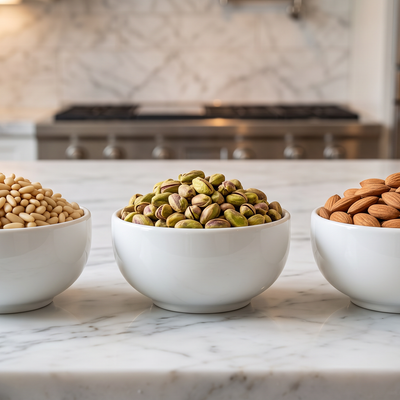
4. Pistachios: ~920 mg/100 g
Pistachios round out the top four with a very respectable amount of phenylalanine, along with potassium, vitamin B6, and antioxidants.
such as lutein. They are also one of the nuts with the best overall nutritional balance, making them a smart choice beyond this particular amino acid.
5. Walnuts: ~850 mg/100 g
Walnuts combine their phenylalanine content with their well-known source of plant-based omega-3s, creating an interesting combination for those looking to support both their nervous system and cardiovascular health.
6. Hazelnuts: ~740 mg/100 g
Hazelnuts provide a moderate amount of phenylalanine, complemented by their high vitamin E content, which protects cell membranes from the oxidative stress associated with intense neuronal activity.
7. Pine nuts: ~560 mg/100 g
Pine nuts have a more modest phenylalanine content, but they make up for it with a very interesting fat profile—rich in pinolenic acid—and a delicate flavor that makes them perfect for Mediterranean dishes.
8. Brazil nuts: ~460 mg/100 g
Brazil nuts aren’t particularly notable for their phenylalanine content, but their value lies elsewhere: they are the most potent natural source of selenium available, with just two or three nuts a day covering the daily requirement for this antioxidant mineral.
9. Macadamia: ~300 mg/100 g
Macadamia nuts bring up the rear in this ranking because they are, by far, the nut with the least protein of all. Their strength, however, lies in monounsaturated fats, where no other nut can beat them.
How to Get the Most Out of the Phenylalanine in Nuts
You don’t need to calculate milligrams to benefit from this amino acid. The key is to maintain a varied rotation of nuts throughout the week, since each variety provides a complementary nutrient profile.
Breakfast: A handful of peanuts or almonds on top of yogurt or oatmeal gives you a good boost of phenylalanine along with steady energy for the entire morning.
Mid-morning snack: Pistachios are a particularly recommended option—they provide phenylalanine, potassium, and the satisfaction of cracking open each shell, which encourages you to eat more slowly and mindfully.
Post-workout: Pair cashews with a piece of fruit. Phenylalanine works alongside branched-chain amino acids to support muscle recovery after exercise.
Light dinner: A few chopped walnuts on a salad round out the day by providing phenylalanine and plant-based omega-3s—a combination that promotes both rest and cardiovascular health.
At nutnut, we roast each batch by hand in small batches, without added oils, so that the amino acid profile of each nut reaches your table intact. From peanuts to pistachios, every handful becomes a simple and delicious way to support your nervous system through your diet.


Leave a comment
This site is protected by hCaptcha and the hCaptcha Privacy Policy and Terms of Service apply.