

Behind every bag of cashews there's a tree with a stranger story than you'd expect. It's called Anacardium occidentale, it comes from Brazil, and it belongs to a botanical family that holds more than one surprise. At nutnut we work with this nut every week, and we think knowing where it comes from and why it has the shape it has helps you appreciate what's inside every roasted handful far more.
If you've read our article on the rise of the pistachio in Spain, you'll know we like to dig into the origins of the nuts we work with, not just their nutritional benefits. The cashew has, perhaps, the most peculiar botanical story in our whole catalogue: what you buy in the shop isn't quite what you think it is, and the reason you'll never find it raw has to do with a chemical quirk it shares with a very unexpected relative.
Let's take it step by step, starting with the origin of this tropical tree and the family it belongs to.
Origin and botanical family
Anacardium occidentale is an evergreen tree or shrub native to north-eastern Brazil, where it grew wild in the coastal lowlands and wooded savannahs long before the Europeans arrived. It reaches between 5 and 12 metres in height, with a broad crown and a trunk that often grows irregularly and branches out from the base.
It belongs to the Anacardiaceae family, a botanical group that includes some very well-known relatives: the mango and the pistachio itself are part of this same family. Less well known is that poison sumac (Toxicodendron) also belongs to it — the plant responsible for some of the most severe contact dermatitis found in nature. This family connection isn't merely a taxonomic curiosity: it directly explains why the cashew hides one of the least known quirks in the world of nuts.
The cashew apple: the fruit almost nobody knows
When you think of a cashew, you probably picture that characteristic curved, elongated shape. But botanically speaking, what you buy in the shop isn't "the fruit" in the strict sense — it's the seed.
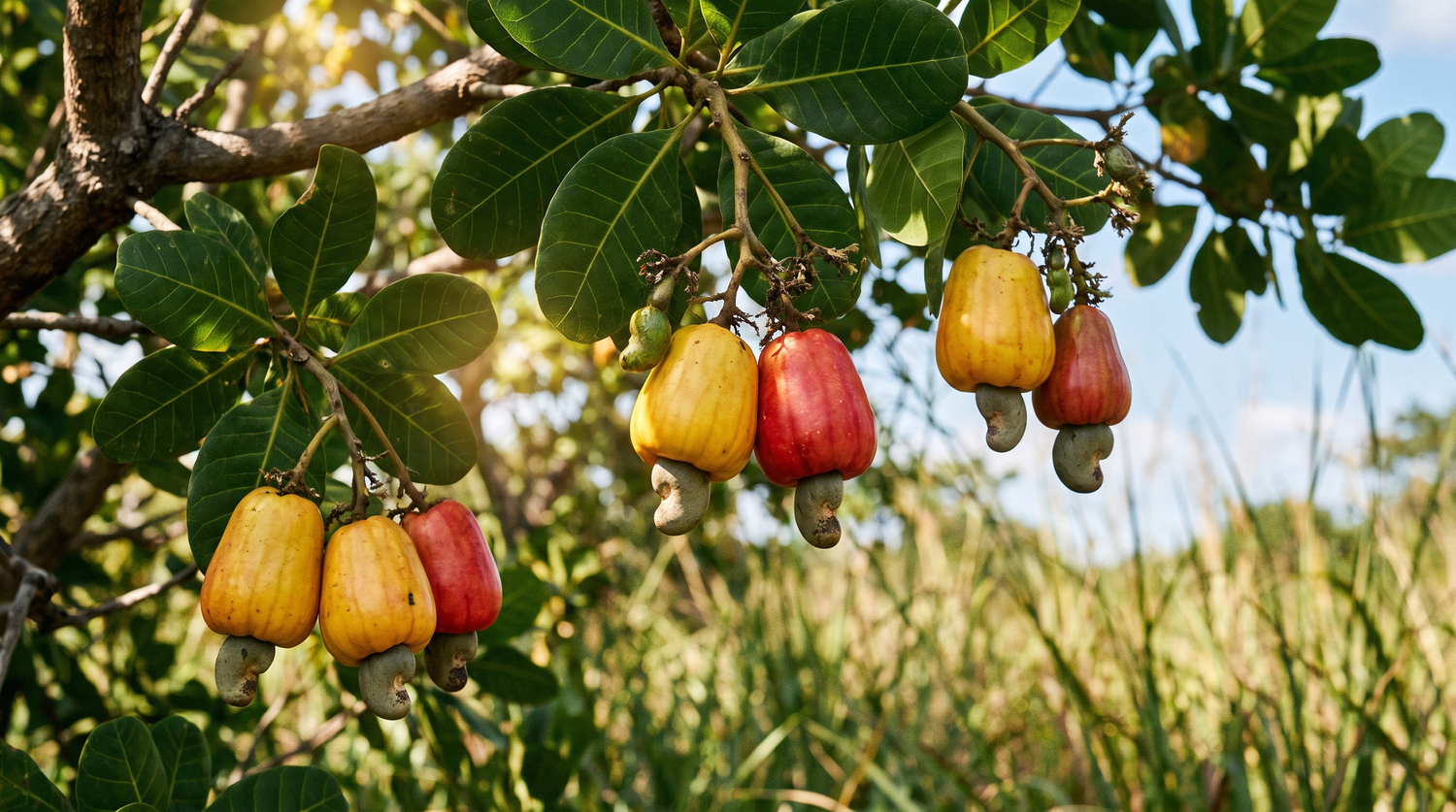
The tree's true fruit grows first, as a hard kidney-shaped drupe, at the end of a stalk that then swells and ripens until it becomes what's known as the cashew apple: a fleshy, juicy, yellow or reddish structure that is in fact a pseudofruit, not the botanical fruit. The cashew you eat as a nut always sits at the tip of that apple, enclosed within its hard shell.
In Brazil the cashew apple has been used for centuries for juices, jams and even a traditional fermented drink, though outside South America it's practically unknown, since it spoils quickly and doesn't travel well over long distances. It is, in a way, the most curious "offcut" of the cashew industry: the pseudofruit that hardly anyone outside its region of origin ever gets to taste.
Why cashews are never sold raw
This is where the kinship with poison sumac we mentioned earlier comes into play. The cashew shell contains an oleoresinous oil made up mainly of anacardic acid and cardol, phenolic compounds chemically related to urushiol, the substance that makes poison sumac and poison ivy so irritating. Direct contact with this oil can cause dermatitis, redness, blistering and inflammation of the skin.
For this reason, the cashew never reaches the market raw and in its shell. The standard industrial process involves roasting or steam-treating the shell while the seed is still inside, which neutralises much of these irritant compounds; it's then dried, shelled by hand or by machine and, in many cases, given a second roast without the shell to develop its characteristic flavour. What's labelled "raw cashew" on a supermarket shelf has, in reality, already been through this neutralisation process: you've never eaten a truly unprocessed cashew, and it's better that it stays that way.
This fact ties in directly with something we've already explained when talking about artisan roasting at nutnut: in the case of the cashew, roasting isn't only a matter of flavour and texture — it's an essential step in making the nut safe to eat.
From Brazil to the world: how the cashew travelled
Although it was born in Brazil, the cashew didn't stay there. It was Portuguese colonisers who, from the 16th century onwards, introduced it into their trade routes towards Africa and Asia, where the tree found tropical climates just as favourable for cultivation.
That journey completely redrew the world production map. Today, Côte d'Ivoire has become the world's largest producer of raw cashew, with an output of around a million and a half tonnes a year. Vietnam, for its part, stands out less for its agricultural production than for its industrial capacity: it imports enormous volumes of in-shell cashew from African countries to process in its plants and re-export ready for consumption, making it the world's great processing hub for this nut. India, with its growing middle class, has established itself as the largest consumer market on the planet.
Curiously, the country that gave the cashew its origin, Brazil, today plays a more modest role in world production compared with these new leading players, although it remains the historical and cultural reference point for this tree.
From the tree to your nutnut bag
Between the tree flowering in a tropical savannah and the roasted cashew that reaches your table there's a long journey: harvesting the apple and its seed, separating the toxic shell using heat or steam, shelling, and finally the roast that gives it its final flavour. At nutnut we select cashews of the best quality and calibre, and we roast them by hand in small batches, with no added oils, so that this process ends in the best possible way: with a nut that's crunchy, safe and with all its flavour intact.
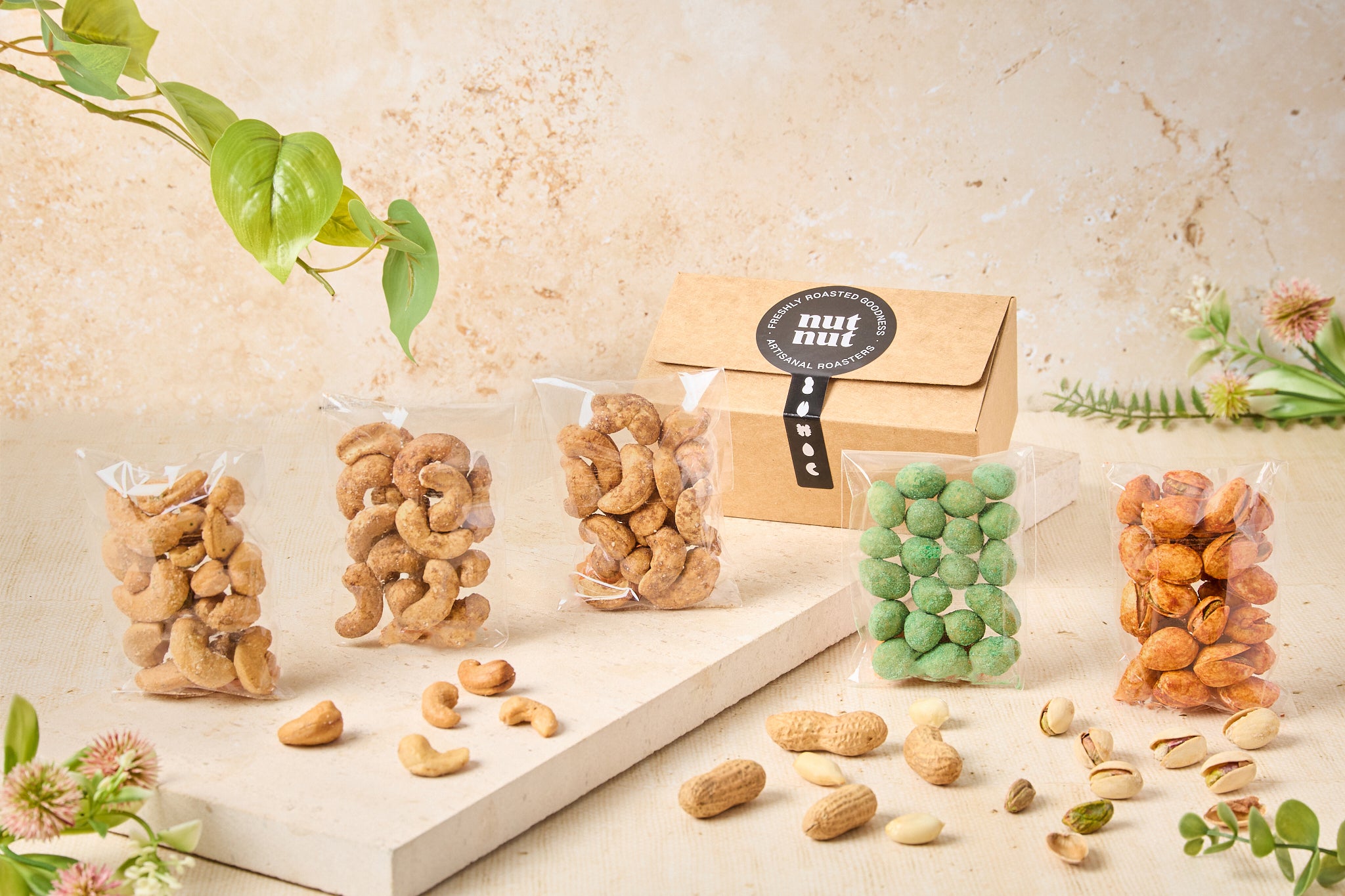
If you'd like to try it in a version with more character, our za'atar roasted cashew combines this base with Mediterranean spices for a different kind of snack. And if you prefer the more classic version, you'll always find the natural cashew in our cashew collection.
How to enjoy cashews throughout the day
Breakfast: a few crushed cashews over yoghurt or oats add natural creaminess without any need for added sugars.
Mid-morning snack: a handful of roasted cashews is a practical option, no refrigeration needed, that holds up well away from home.
Lunch or dinner: whole or chopped cashews add a crunchy touch to salads, vegetable stir-fries or rice-based dishes, very common in South-East Asian cooking, where this nut has found a second home.
Afternoon snack: the za'atar roasted cashew is an option with more personality for anyone looking for something different from the plain nut.
Next time you open a bag of cashews, you'll know you're holding the seed of a tropical pseudofruit, a distant relative of the mango and the pistachio, which has travelled from the coasts of Brazil to become one of the most prized nuts in the world.


Leave a comment
This site is protected by hCaptcha and the hCaptcha Privacy Policy and Terms of Service apply.