




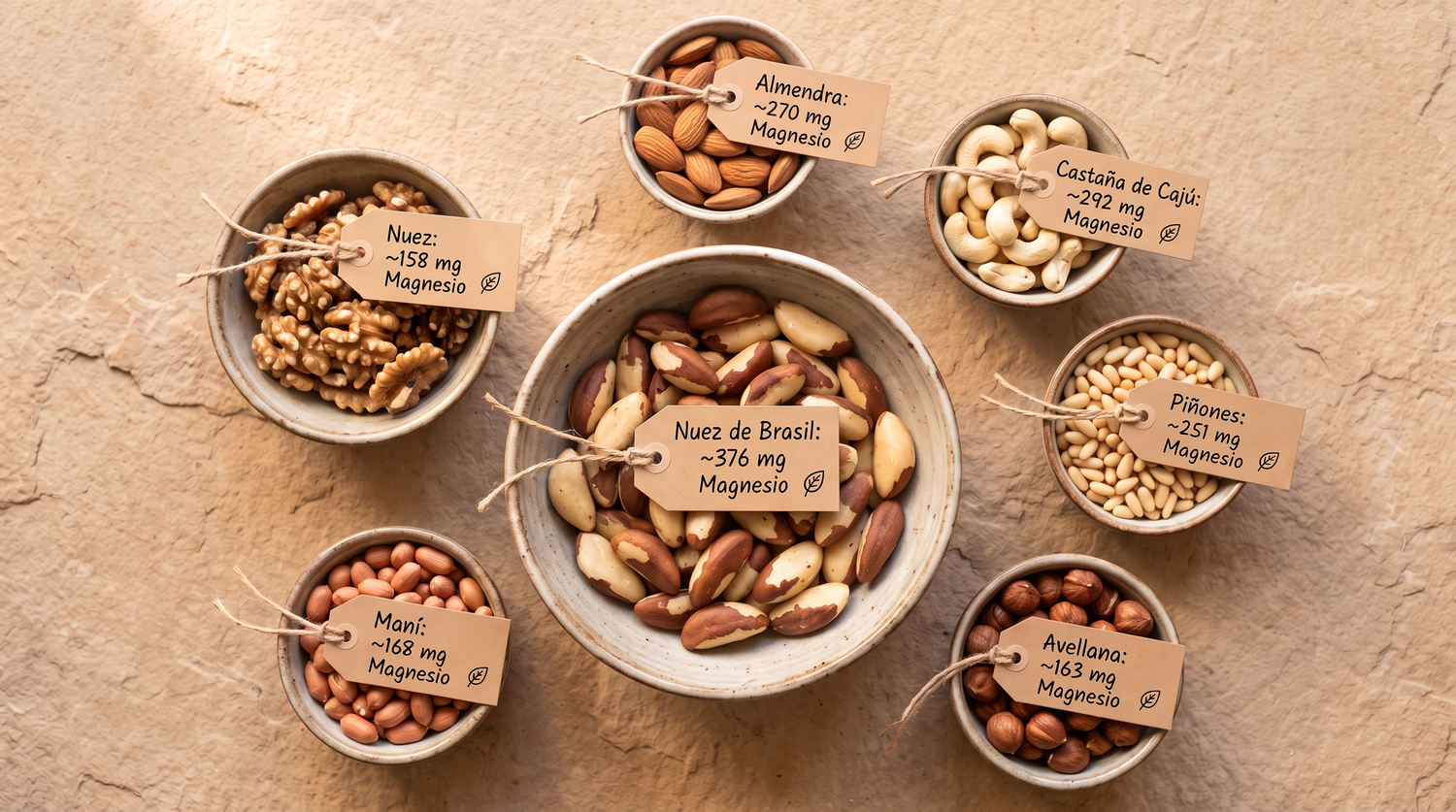
Magnesium is one of those minerals that rarely features in conversations about nutrition, yet it participates in hundreds of different processes within the body, from muscle contraction to sleep quality. At nutnut, we find it in almost all the nuts in our selection, although with notable differences between varieties, and Brazil nuts rank far ahead of the rest.
We've already discussed other lesser-known micronutrients in nuts, such as selenium and vitamin E, and magnesium deserves the same treatment: it is one of the minerals with the most real deficiencies in the Western diet, and nuts are among the most concentrated plant-based sources available.
Before we get to the ranking, it's worth understanding why this mineral has earned a reputation as a "relaxant" and what is true—and exaggerated—in that reputation.
What is magnesium and why is it an essential mineral?
Magnesium is an essential mineral that the body cannot produce on its own and acts as a cofactor in over three hundred different enzymatic reactions. It is involved in cellular energy production, protein and DNA synthesis, muscle contraction and relaxation, and nerve impulse transmission.
The reference intake is between 300 and 350 mg per day for an adult, depending on the usual variable of sex and body weight. Various consumption surveys in Western countries, including Spain, show that the average intake for a significant portion of the population is below this figure, making magnesium one of the minerals with the most room for improvement in the usual diet.
Functions of magnesium in the body
Muscle contraction and relaxation
Magnesium acts as a natural regulator of calcium within the muscle cell: while calcium promotes contraction, magnesium allows the muscle to relax afterward. Insufficient intake has been linked in some studies to a higher incidence of cramps and muscle spasms, although the scientific evidence on this is not entirely conclusive and depends on multiple factors in addition to magnesium.
Nervous system and stress management
Magnesium participates in the regulation of neurotransmitters involved in the stress response and modulates the activity of the central nervous system. For this reason, it is attributed a relaxing role, although caution is advised: the effect of a handful of nuts on mood is much more modest than many headlines suggest, and it works better as part of a balanced overall diet than as an isolated solution.
Bone health
Approximately 60% of the body's magnesium is stored in bones, where it is involved in bone matrix formation alongside calcium and vitamin D. Adequate and sustained intake over time contributes to maintaining bone density, which is especially relevant from adulthood onwards.
Energy metabolism and glucose regulation
Magnesium is necessary to activate ATP, the molecule the body uses as energy currency, and it participates in the proper action of insulin. Adequate magnesium intake has been associated in population studies with better blood glucose control, although again, it is important not to draw exaggerated conclusions from observational studies.
Heart rate and blood pressure
Magnesium works with potassium to regulate heart rate and helps maintain proper blood vessel tone, another factor within the overall cardioprotective effect attributed to regular nut consumption.
Magnesium in nuts: ranking from highest to lowest content
The following ranking shows the amount of magnesium per 100 grams of nuts. As with other nutrients, values are approximate and vary depending on the variety and processing.
1. Brazil nut: ~376 mg/100 g
The Brazil nut tops the magnesium ranking with a significant difference over the rest, also boasting an extraordinary selenium content, a mineral duo difficult to match in the plant world.
2. Almonds: ~270 mg/100 g
Almonds, the most consumed nut in Spain, are also one of the best sources of magnesium, reinforcing their role as one of the most nutritionally complete nuts.
3. Cashews: ~260 mg/100 g
Cashews provide a very similar amount of magnesium to almonds, along with iron and zinc, forming a very interesting mineral profile for plant-based diets.
4. Pine nuts: ~251 mg/100 g
Pine nuts occupy a surprisingly high position in this ranking, a good additional reason to incorporate them beyond their usual culinary use.
5. Peanuts: ~170 mg/100 g
Peanuts add magnesium to their already well-known high protein profile, reinforcing their usefulness in active diets.
6. Hazelnuts: ~163 mg/100 g
Hazelnuts provide a solid amount of magnesium, complemented by their richness in vitamin E and folate.
7. Walnuts: ~158 mg/100 g
Walnuts add magnesium to their well-known vegetable omega-3 profile, an interesting combination for both cardiovascular and nervous health.
8. Macadamia: ~118 mg/100 g
Macadamia provides a more moderate amount of magnesium, consistent with a nutritional profile primarily focused on monounsaturated fats.
9. Pistachios: ~109 mg/100 g
Pistachios close the ranking for magnesium, although they still excel in other areas, such as their potassium, vitamin B6, and fiber content.
How to make the most of magnesium from nuts
To adequately meet your magnesium needs, the key is regularity and combining different varieties throughout the week.
- Breakfast: a couple of Brazil nuts along with a handful of almonds on yogurt or oatmeal add a significant portion of your daily magnesium from the very beginning of the day.
-
Mid-morning snack: cashews or pine nuts, two practical options with good mineral content.
-
Post-workout: peanuts or hazelnuts, useful as part of post-exercise recovery, where magnesium accompanies other key nutrients for muscle function.
-
Dinner or before bed: a small handful of walnuts or almonds, a simple way to add magnesium at the time of day when it is most often attributed a relaxing role, although without expecting more from it than what the evidence supports.
At nutnut, we roast each variety by hand in small batches, ensuring that minerals like magnesium reach your plate as intact as possible. Brazil nuts and almonds, due to their position in this ranking, are two of the simplest and most delicious ways to meet your daily magnesium needs.




Leave a comment
This site is protected by hCaptcha and the hCaptcha Privacy Policy and Terms of Service apply.