

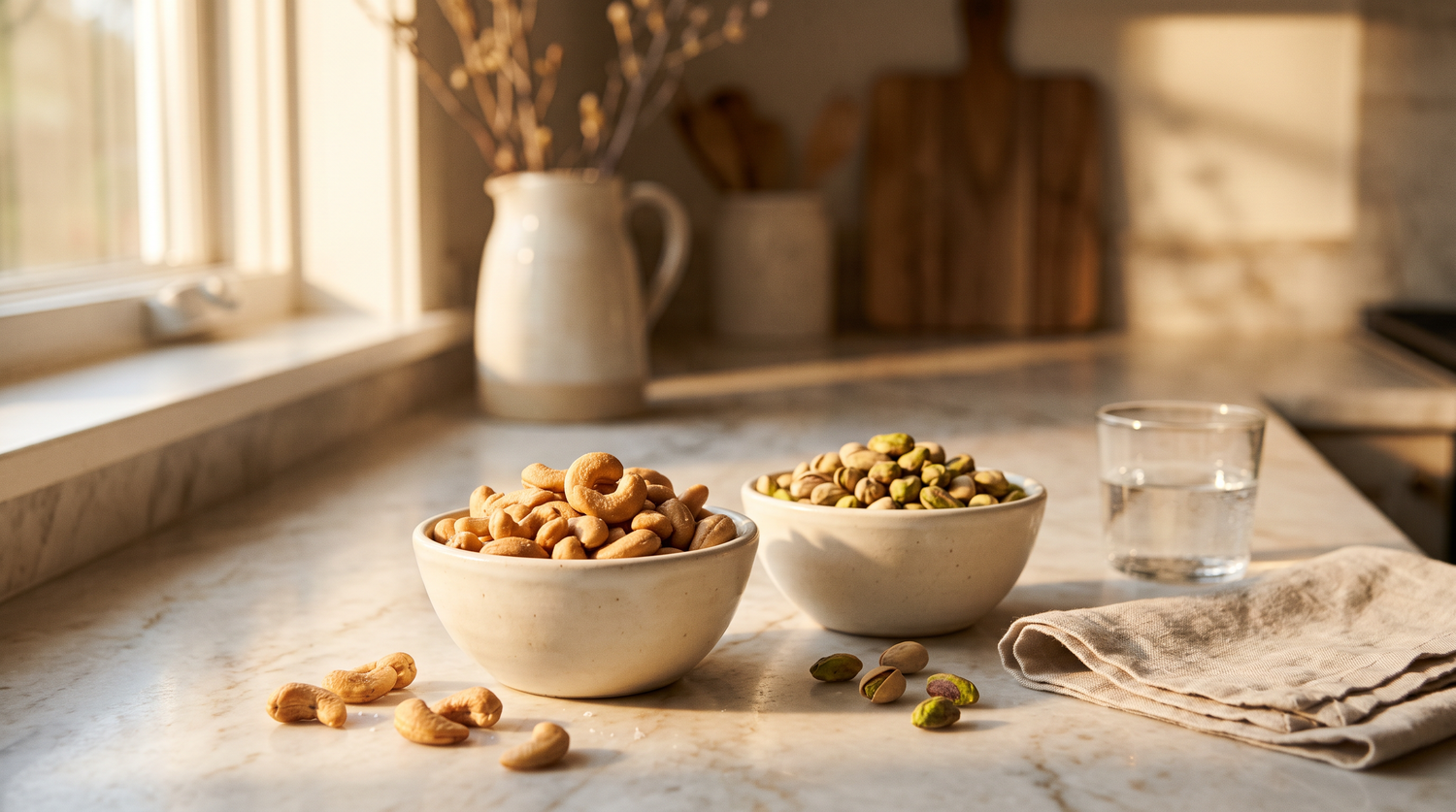
Tryptophan is one of the nine essential amino acids and probably the best known outside scientific circles: it's the one popular wisdom associates with the Christmas turkey and that sleepy feeling after a big meal. The reality is rather more nuanced, but no less interesting for it, because tryptophan is the starting point for serotonin and melatonin, two molecules that regulate your mood and your rest. At nutnut we find it naturally in several of the nuts in our selection, with cashews and pistachios leading the ranking.
If you already know our content on leucine in nuts, isoleucine, lysine or methionine, you'll know that every essential amino acid has a very particular job. Tryptophan stands out for being the least abundant of them all in most dietary proteins, and that is precisely why it's worth knowing which nuts concentrate the most.
Unlike amino acids with a more muscular profile, such as the BCAAs, tryptophan plays a more neurological and emotional role. Understanding how it actually works — and why eating it on its own isn't enough to feel its effects — will help you get far more out of it within a varied diet.
What tryptophan is and why it's essential
Tryptophan is an essential amino acid that the body cannot synthesise, so it has to be obtained entirely through food. Of the nine essential amino acids, it's the one that appears in the smallest amount in most proteins, animal and plant alike, which makes it a nutrient that deserves specific attention.
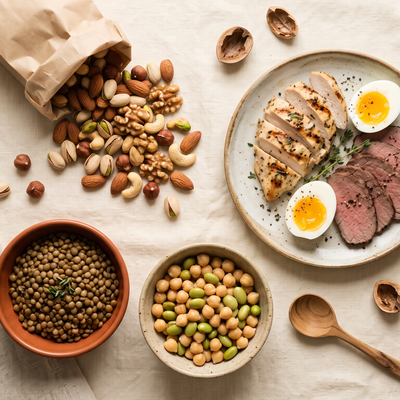
The reference intake sits at around 4 mg per kilogram of body weight per day, which for a 70 kg person works out at roughly 280 mg daily. It's a relatively low figure compared with other essential amino acids, and a varied diet including nuts, pulses, eggs or dairy covers it without difficulty.
What tryptophan does in the body
Serotonin precursor
Tryptophan's best-known function is to serve as raw material for serotonin, the neurotransmitter involved in regulating mood, appetite and the sense of wellbeing. The body converts tryptophan into serotonin through a multi-step process that also depends on an adequate supply of vitamin B6, magnesium and iron — all of them likewise present in many nuts.
Melatonin precursor
From serotonin, the body synthesises melatonin, the hormone that regulates the sleep-wake cycle. This chain — tryptophan, serotonin, melatonin — explains why this amino acid is traditionally associated with rest, although the full process depends on many other factors, such as light exposure or meal timing.
Niacin (vitamin B3) synthesis
Tryptophan is also a precursor of niacin, a B-group vitamin involved in energy metabolism. When the diet provides little tryptophan and little niacin at the same time and over a sustained period, a deficiency can appear; it's a mechanism nutrition science identified decades ago in diets based almost exclusively on maize, where both nutrients are scarce.
General protein synthesis
Like any essential amino acid, tryptophan forms part of the structure of the body's proteins, working alongside the rest of the amino acids — including the ones we've already covered in the article on BCAAs in nuts — in the repair and maintenance of tissues.
The turkey myth, and why eating tryptophan on its own isn't enough
Here it's worth clearing up a detail that's almost never explained properly: tryptophan competes with other similarly sized amino acids to cross the blood-brain barrier and reach the brain, where it's turned into serotonin. A protein-rich food — turkey, but also nuts — delivers tryptophan alongside a good amount of other amino acids competing for that same "pass" into the brain, so eating it in isolation doesn't guarantee that more tryptophan reaches the nervous system.
What's interesting is that combining a source of tryptophan with carbohydrates does help: the insulin released when you eat carbohydrates encourages those competing amino acids to head towards muscle, leaving more of a clear run for tryptophan to cross into the brain. That's why a combination of nuts with some fruit or wholegrain cereal in the late afternoon or evening makes more physiological sense than a handful of nuts on their own if the goal is to support relaxation.
Tryptophan in nuts: ranking from highest to lowest
The ranking below shows the amount of tryptophan per 100 grams of each nut. As with the other amino acids, the values are approximate and vary according to variety and processing.
1. Cashews: ~290 mg/100 g
Cashews top the tryptophan ranking among nuts, and they also bring magnesium and zinc, two minerals that play an indirect part in serotonin synthesis. Their creamy texture makes them highly versatile in mixes and butters.
2. Pistachios: ~255 mg/100 g
Pistachios sit very close to cashews, reinforcing their reputation as one of the most complete nuts in terms of amino acid profile. They also provide potassium and vitamin B6, the latter needed to complete the conversion of tryptophan into serotonin.
3. Peanuts: ~230 mg/100 g
Although botanically they are legumes, peanuts behave like a high-performing nut in protein terms, and this also translates into a good supply of tryptophan per 100 grams.
4. Almonds: ~210 mg/100 g
Almonds, the most widely eaten nut in Spain, occupy a mid-to-high position. Their availability and versatility make them one of the easiest ways to add tryptophan on a regular basis.
5. Hazelnuts: ~195 mg/100 g
Hazelnuts provide a notable amount of tryptophan, alongside their well-known richness in vitamin E and folate, which round out the overall nutritional profile.
6. Walnuts: ~170 mg/100 g
Walnuts add tryptophan to their familiar plant-based omega-3 profile, an interesting combination for anyone looking after both mood and cardiovascular health.
7. Brazil nuts: ~135 mg/100 g
Brazil nuts provide a moderate amount of tryptophan, along with their extraordinary selenium content, a mineral with a significant antioxidant role.
8. Pine nuts: ~105 mg/100 g
Pine nuts occupy a modest position in this particular ranking, although they remain a genuine source of tryptophan within a varied diet, as well as a very versatile ingredient in Mediterranean cooking.
9. Macadamias: ~65 mg/100 g
The macadamia, consistent with its generally low protein content, provides the least tryptophan of the group, although it stands out for its monounsaturated fat profile.
How to make the most of the tryptophan in nuts
For the tryptophan in nuts to do its job as efficiently as possible, two practical ideas are worth keeping in mind: consistency throughout the day, and combining it with quality carbohydrates at the moments when you're looking for relaxation.
Breakfast: a handful of pistachios or cashews together with a piece of fruit adds tryptophan and vitamin B6 from the very start of the day.
Mid-morning snack: almonds or hazelnuts, easy to carry and with no need for refrigeration.
Late afternoon and evening: this is where the combination matters most. A handful of walnuts or cashews together with some fruit or a wholegrain cereal makes it easier — following the physiology we've explained — for tryptophan to reach the brain and be converted into serotonin and, later, melatonin.
A light dinner: chopped Brazil nuts over a vegetable soup with some wholegrain cereal rounds off the day with an easy dose of tryptophan.
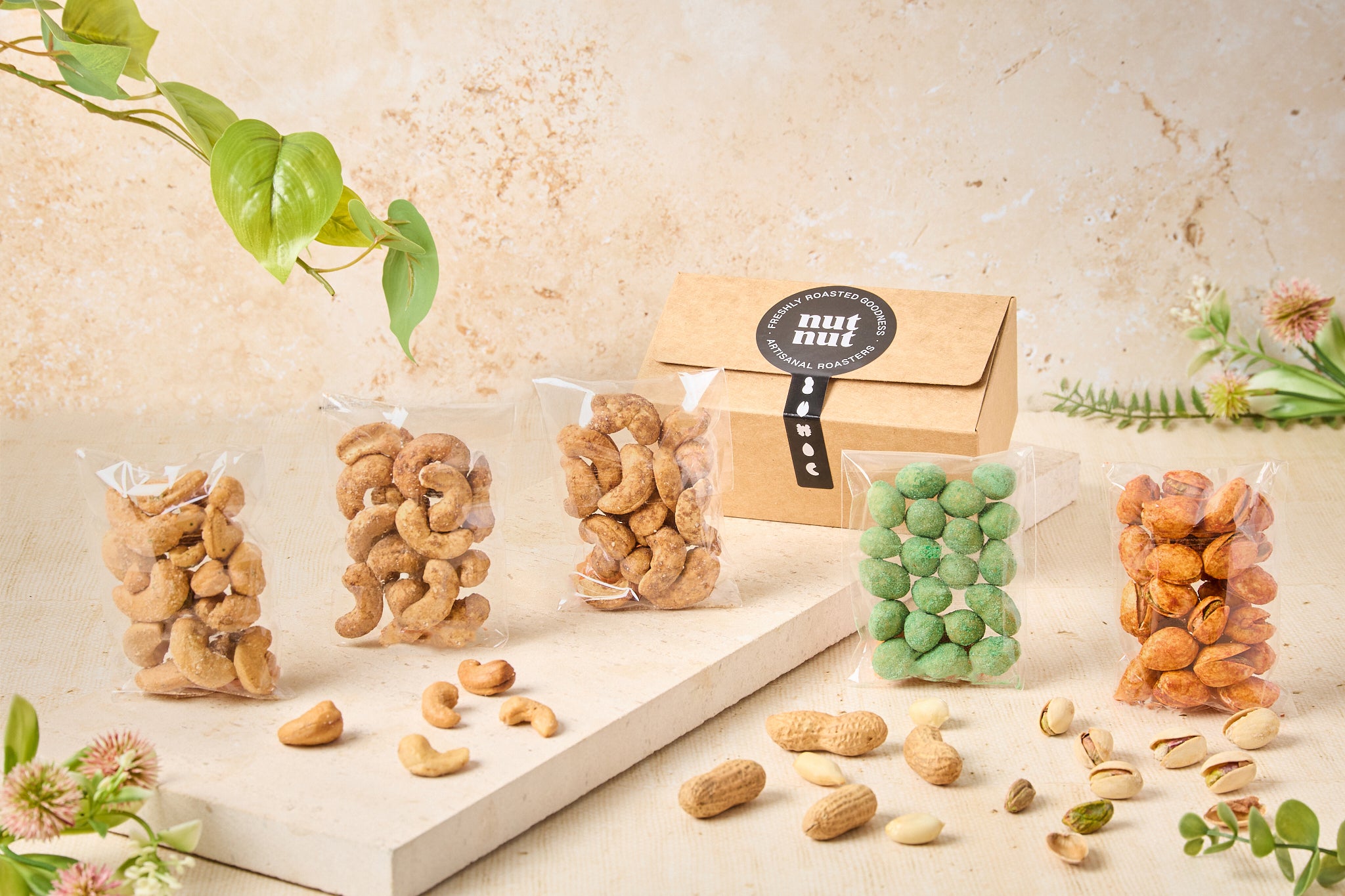
At nutnut we roast every variety by hand and in small batches, taking care that the nutritional profile reaches your plate as intact as possible. Cashews and pistachios, given their position in this ranking, are two of the most natural and flavourful ways to get closer to your daily tryptophan needs.


Leave a comment
This site is protected by hCaptcha and the hCaptcha Privacy Policy and Terms of Service apply.