


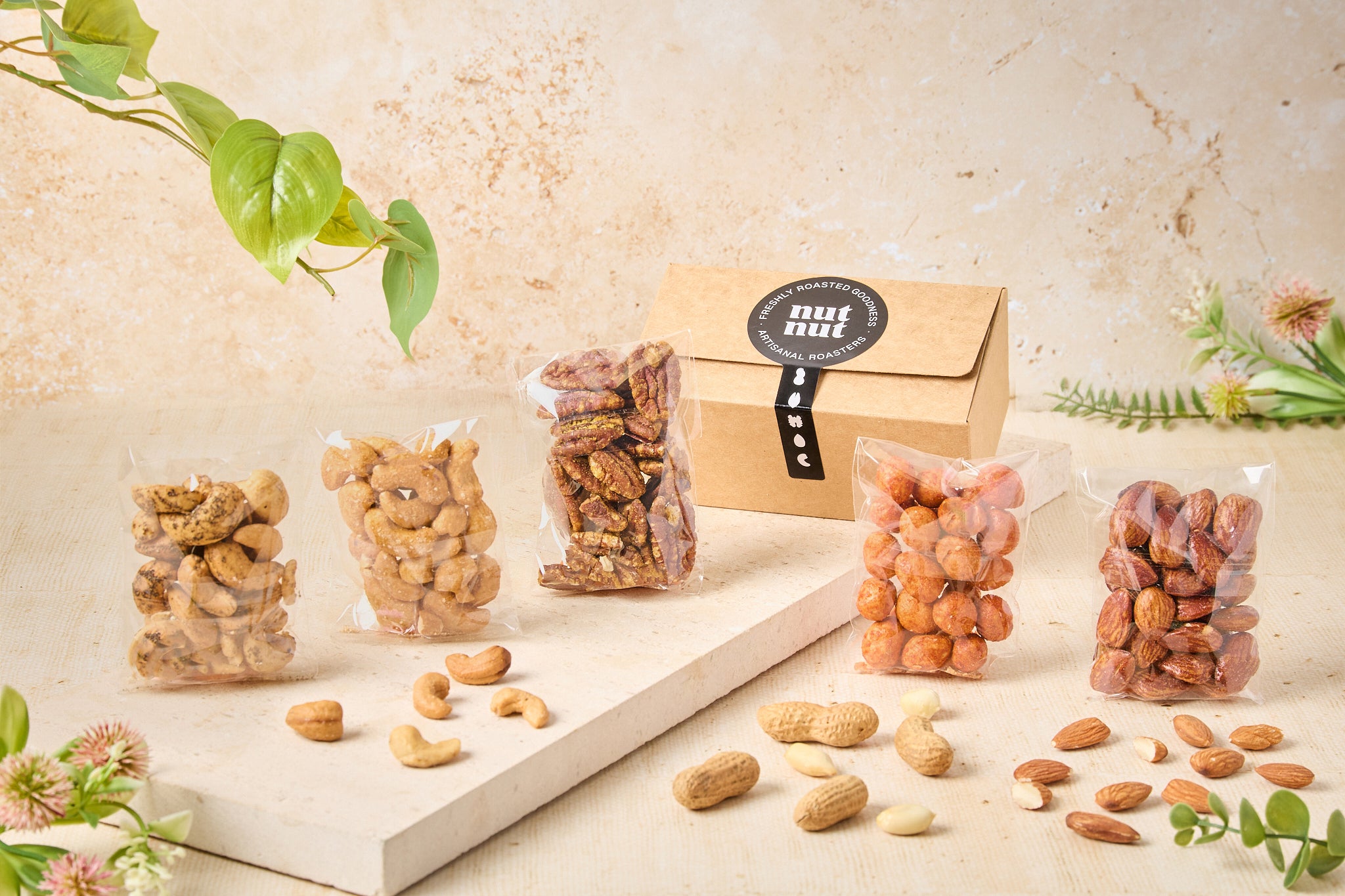
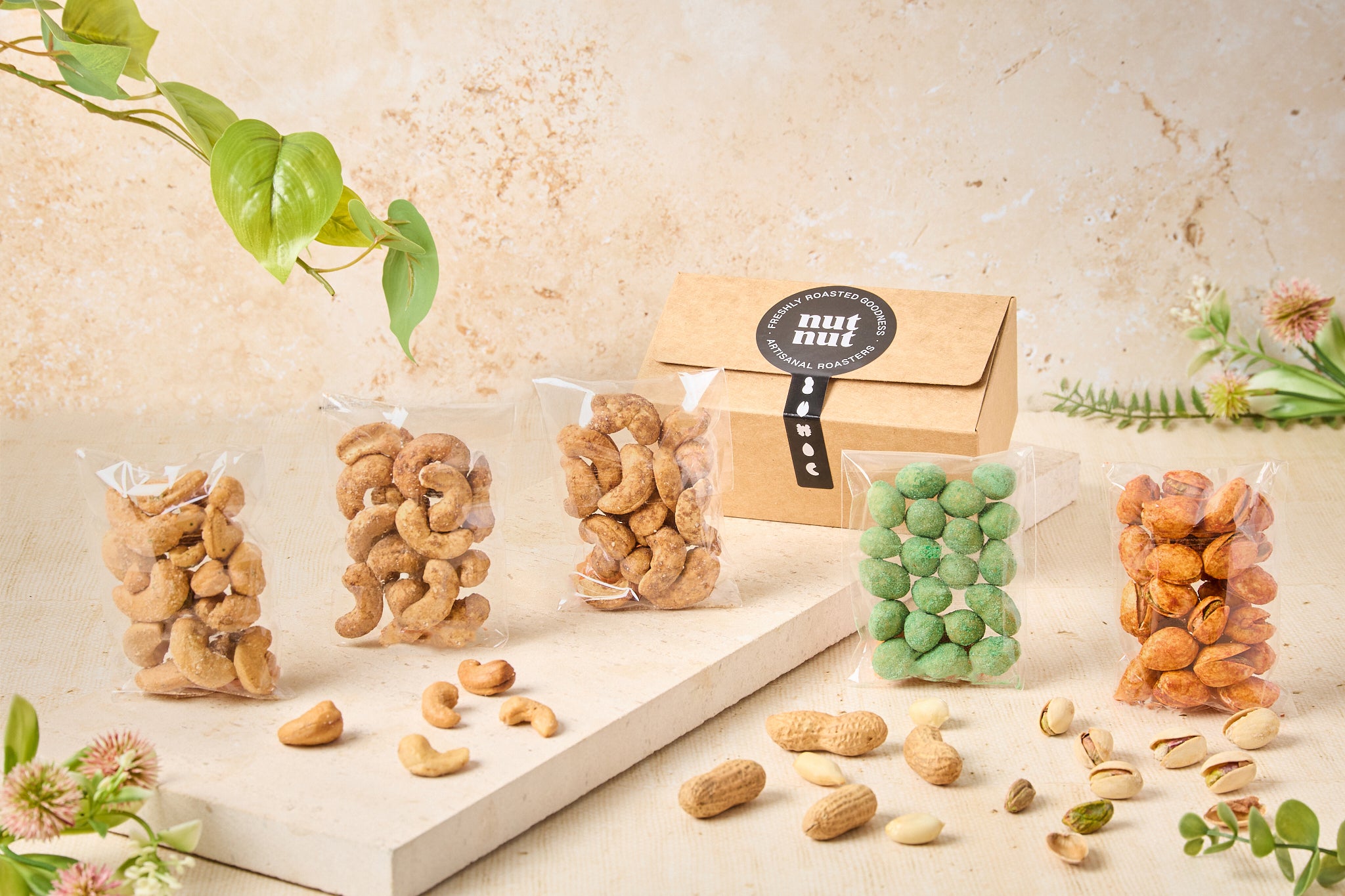
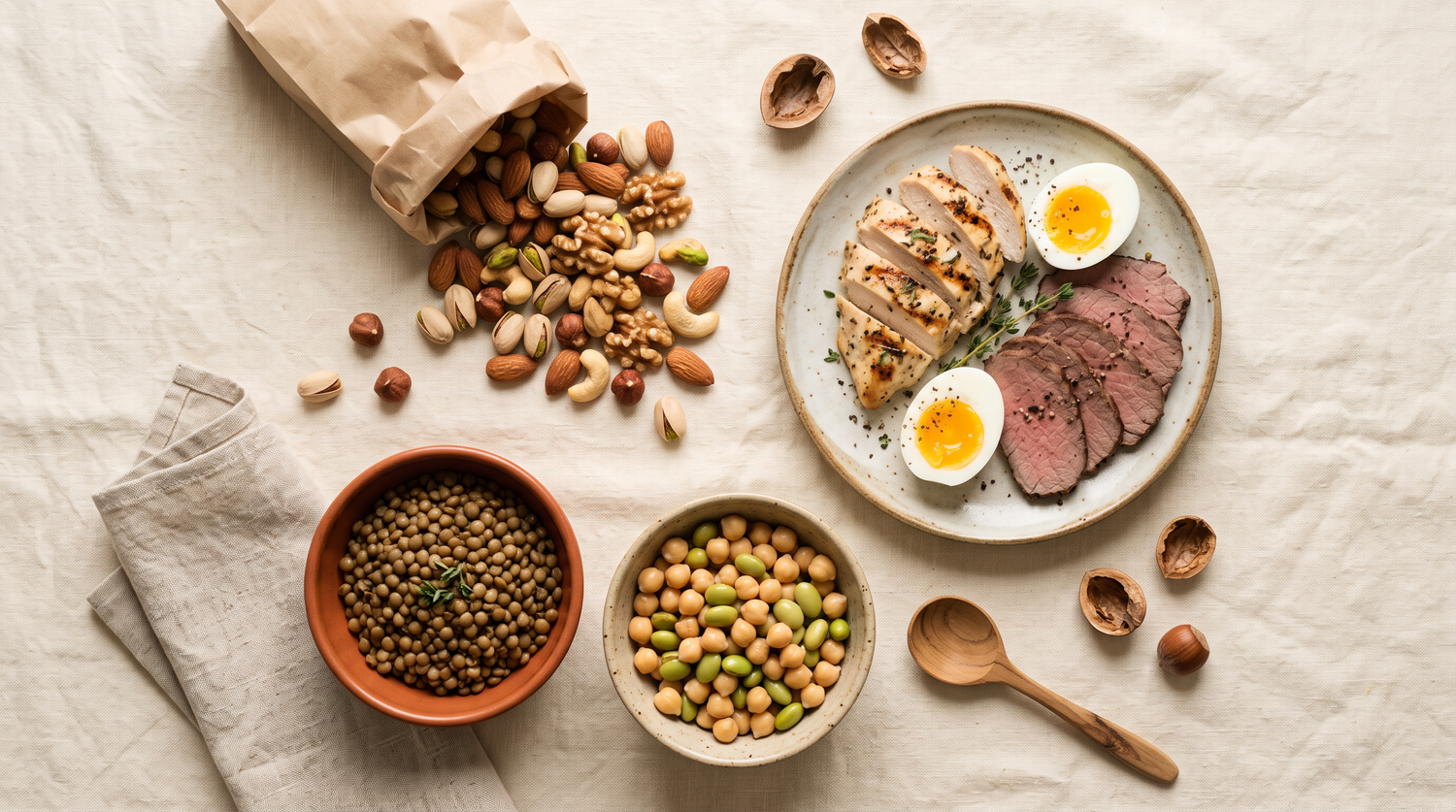
Whenever protein comes up, the conversation almost always collapses into a single number: how many grams there are per 100 grams of food. It's a useful figure, but an incomplete one. The question that really matters isn't just how much protein a food delivers, but whether that protein contains all nine essential amino acids — the ones your body can't make on its own — in the right proportions. At nutnut we believe that understanding this difference is what actually helps you decide how to combine nuts, legumes and meat day to day.
We've already covered specific amino acids in nuts, such as leucine, lysine and BCAAs. This article goes a step further: instead of zooming in on one amino acid or one type of nut in isolation, it compares whole food families — nuts, legumes and meat — so you can see where the real difference lies.
Here's the conclusion up front, because the data doesn't leave much room for an easy headline: nuts don't replace meat, and meat doesn't make nuts and legumes unnecessary. Each source has a different amino acid profile, and the soundest strategy — the one entire generations of traditional diets have relied on — is to combine them.
Let's start by clarifying what it actually means for a protein to be "complete", because that's the concept everything else hangs on.
Complete protein: what it means and why it's the right question
A protein is considered complete when it supplies all nine essential amino acids — the ones the body can't synthesise and has to get from food — in amounts sufficient to cover the body's needs. When a food is low in one of them relative to the rest, that amino acid becomes its "limiting amino acid": however much total protein the food contains, your body can only use the share that limiting amino acid allows it to build.
Animal proteins — meat, fish, eggs, dairy — are usually complete by nature. Plant proteins, on the other hand, almost always have a limiting amino acid. That doesn't make them inferior, but it does call for a different approach: combining several plant sources across the day so they complement each other.
Nuts vs legumes: protein, fibre and the limiting amino acid
Nuts and legumes are both plant proteins, but their amino acid profiles differ — and that's precisely why they work so well together. Nuts, like grains, tend to be somewhat low in lysine. Legumes are the opposite: rich in lysine, but more limited in sulphur amino acids such as methionine.
This complementarity is no minor nutritional footnote: it's the same logic behind traditional pairings like rice and lentils or hummus and pita bread, and it works just as well if you swap the grain for a handful of nuts.
One curious case within this comparison is the peanut itself: botanically it's a legume, not a tree nut, even though the kitchen and the supermarket shelf treat it as just another nut. Its amino acid profile is closer to its botanical cousins — lentils, chickpeas, soy — than to almonds or walnuts.
Nuts vs meat: complete protein, but that's not the whole story
Meat delivers complete protein directly, with nothing else needed alongside it, plus vitamin B12 and heme iron, which the body absorbs more easily than plant-based iron. On that front it has a clear, objective advantage over any nut.
But the comparison can't stop there. Nuts bring fibre — which meat contains none of — unsaturated fats instead of saturated ones, and phytosterols that have a beneficial effect on cholesterol. Replacing part of the animal protein in your diet with nuts and legumes, without cutting it out entirely, is one of the best-supported strategies for improving your cardiovascular profile over the long term.
Comparison table: protein and limiting amino acid by source
The values are approximate and refer to each food as it is usually eaten (meat and legumes cooked, nuts raw or roasted without salt). They are shown separately precisely to avoid mixing cooked and raw weights — a common mistake in comparisons like this one.
|
Food |
Protein (g/100 g) |
Limiting amino acid |
Complete protein? |
|---|---|---|---|
|
Chicken breast (cooked) |
~31 g |
None relevant |
Yes |
|
Lean beef (cooked) |
~26 g |
None relevant |
Yes |
|
Egg |
~13 g |
None (benchmark) |
Yes |
|
Peanut (raw) |
~25 g |
Methionine/cysteine |
No |
|
Almond (raw) |
~21 g |
Lysine |
No |
|
Pistachio (raw) |
~20 g |
Methionine/cysteine |
No |
|
Dry soybeans / edamame |
~36 g (dry) |
None relevant |
Almost complete |
|
Chickpeas (cooked) |
~9 g |
Methionine/cysteine |
No |
|
Lentils (cooked) |
~9 g |
Methionine/cysteine |
No |
Notice a detail that usually slips by: soy is, along with quinoa, one of the few plant proteins that comes close to the profile of a complete protein. It's the exception within the legume family, not the rule.
How to combine them across the day
At breakfast, yoghurt or oat porridge with a handful of walnuts or almonds gives you quality plant protein without reaching for animal protein that early in the day.
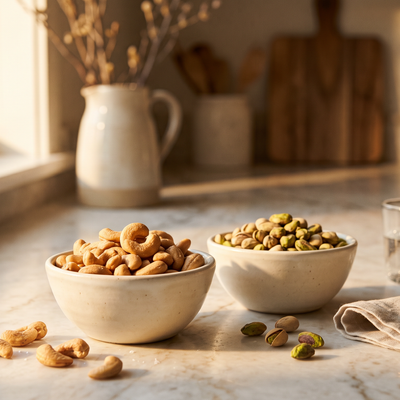
As a mid-morning snack, a mix of pistachios and cashews keeps your energy steady and adds fibre — something no animal-based snack offers.
After training, if your goal is to maximise muscle protein synthesis, the most effective combination is still animal protein or a shake with complete protein, alongside nuts for the healthy fats and micronutrients that protein powder doesn't provide.
At dinner, a plate of legumes with vegetables and a handful of chopped hazelnuts scattered on top is a simple example of protein complementarity: you cover each source's limiting amino acid without needing animal protein that night.
At nutnut we roast every variety in small batches and dry, with no added oils, so that the handful of nuts you add to your plate brings maximum flavour with minimum intervention. Protein doesn't depend on one miracle food — it depends on how you combine what's already on your table.


Leave a comment
This site is protected by hCaptcha and the hCaptcha Privacy Policy and Terms of Service apply.