

It is probably the question we have been asked most often since nutnut began: do nuts make you gain weight? The short answer is no, at least not in the way many people imagine, but the long answer is much more interesting and has to do with how your body actually digests a nut, not just with the calories that appear on the label.
We are going to debunk this myth with data, not opinions, because this is a subject where misinformation abounds in both directions: both those who claim that "they never make you gain weight" and those who avoid them for fear of their caloric density are missing part of the story.
Why the belief exists that they cause weight gain
The logic behind the myth is understandable at first glance: nuts are calorie-dense foods with a high fat content, and for decades nutrition has been simplified to the equation "more fat and more calories per gram equals more weight." You only need to look at a nutritional table to see that 100 grams of macadamia nuts provide more than 700 kcal, a figure that is scary at first glance.
The problem with this reasoning is that it assumes the body absorbs one hundred percent of the calories indicated on the label, and in the case of nuts, that is not exactly the case.
What the scientific evidence actually says
Population studies have been showing something for more than two decades that, at first, is counterintuitive: regular consumption of nuts is not associated with higher body weight, but rather with a lower risk of obesity. In Spain, the SUN study from the University of Navarra, one of the most cited Mediterranean diet follow-ups, found that people who consumed nuts regularly gained less weight in the long term than those who did not consume them, within a Mediterranean eating pattern.
This is not magic or a particularity of nuts against the laws of thermodynamics. There are at least three well-documented mechanisms that explain why their real effect on weight is less than what their nutritional label suggests.
The effect of the cellular matrix: why you don't absorb all their calories
This is, probably, the least known piece of data in the entire debate. Several studies, including those by Novotny's team at the USDA, have measured with direct methods (analyzing what is actually absorbed versus what is excreted) the actual metabolizable energy of almonds, cashews, hazelnuts, pistachios, walnuts, and peanuts, comparing it with that predicted by standard nutritional tables (the so-called Atwater factors).
The result is consistent in all studies: the energy that the body actually absorbs from a whole nut is less than what the label indicates. The reason is that a good part of the fat remains trapped inside the cellular structure of the nut, and if chewing does not completely break those cell walls, part of that fat passes through the digestive system without being absorbed. This also explains why a whole nut "fattens" less than the same amount in the form of butter or flour, where that cellular structure is already broken down.
Satiety: the other side of the equation
Beyond what is not absorbed, nuts have a real effect on appetite. Their combination of fiber, protein, and healthy fats slows down gastric emptying and prolongs the feeling of satiety, which in practice means that those who incorporate nuts as a snack tend to compensate by eating a little less at subsequent meals, without consciously intending to.
This is one of the reasons why replacing an ultra-processed snack with a handful of nuts tends to improve the overall quality of the diet, beyond the strict calorie count.
Calories in nuts: ranking from highest to lowest
The following ranking shows the calories per 100 grams of nut, useful as a reference, although as we have seen, not all that energy is actually absorbed. The values are approximate and vary according to the variety and processing.
1. Macadamia: ~720 kcal/100 g
Macadamia is the most caloric nut in our catalog, consistent with its very high content of monounsaturated fats.
2. Pine nuts: ~670 kcal/100 g
Pine nuts are at the top of the ranking, although their regular use in Mediterranean cuisine is usually in small quantities.
3. Brazil nuts: ~660 kcal/100 g
Brazil nuts compensate for their caloric density with an exceptional content of selenium and magnesium in very few units.
4. Walnuts: ~650 kcal/100 g
Walnuts add to this figure their recognized profile of plant-based omega-3, one of the most complete among nuts.
5. Hazelnuts: ~630 kcal/100 g
Hazelnuts occupy an intermediate position, with a good contribution of vitamin E and fiber that accompanies their calories.
6. Almonds: ~580 kcal/100 g
Almonds, the most consumed nut in Spain, are in the lower-middle part of the ranking, with a particularly favorable profile in fiber and calcium.
7. Peanuts: ~575 kcal/100 g
Although botanically they are legumes, peanuts provide fewer calories than most tree nuts, along with their high protein content.
8. Cashews: ~570 kcal/100 g
Cashews are among the least caloric nuts in the ranking, with a mineral profile highlighting iron and magnesium.
9. Pistachios: ~570 kcal/100 g
Pistachios round out the ranking alongside cashews as one of the least caloric options, in addition to being among the richest in fiber and potassium.
When they can make you gain weight
Honesty matters here: nuts are not a magic food exempt from the laws of energy. If consumed in quantities much higher than recommended, in addition to the rest of the usual diet without replacing anything, they can indeed contribute to a positive caloric balance, like any other energy-dense food.
The reference serving is around 25-30 grams per day, approximately a handful. Within that amount, and by substituting snacks of lower nutritional quality, evidence clearly supports that nuts do not cause more weight gain than expected, and may even help maintain a more stable weight in the long term.
How to incorporate them without fear of the scale
Breakfast: a handful of almonds or cashews over yogurt or oatmeal, within the recommended serving.
Mid-morning snack: pistachios in the shell, which also slow down the pace of consumption and help control the amount naturally.
Lunch: walnuts or hazelnuts chopped over a salad, replacing other types of less healthy dressing or toppings.
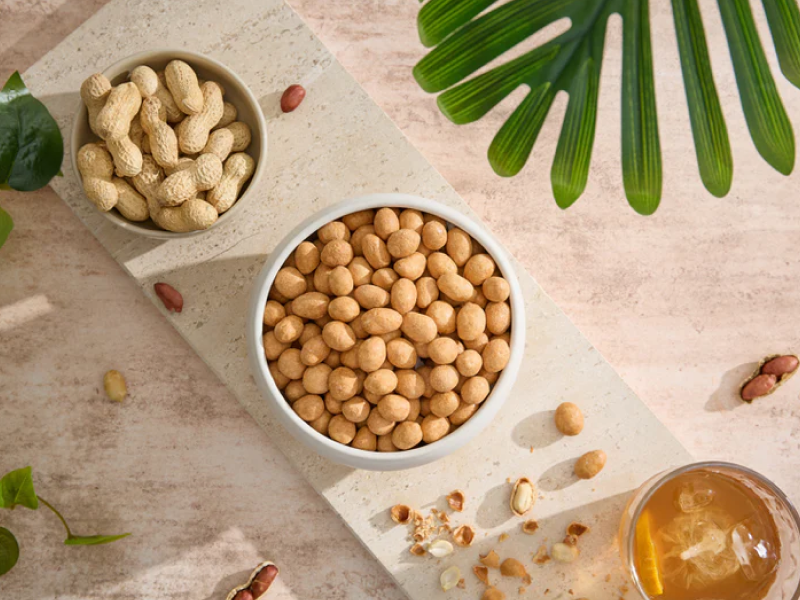
Afternoon snack: natural peanuts, a satiating option that helps you reach dinner without hunger spikes.
At nutnut, we measure and control our sales portions with exactly this in mind: enjoying nuts within a reasonable amount, artisanally toasted and without added oils, is perfectly compatible with taking care of your weight.



Leave a comment
This site is protected by hCaptcha and the hCaptcha Privacy Policy and Terms of Service apply.