



Polyunsaturated fats are, probably, the most important fats you can add to your diet. They are essential — the body can’t make them on its own — they play a direct role in inflammation, cardiovascular health and brain function, and nuts are one of their best natural sources. Walnuts, in particular, have a polyunsaturated profile that is unrivalled in the world of nuts.
Polyunsaturated fats belong to the larger family of unsaturated fats. If you want to understand the full context of how they relate to monounsaturated fats and why all these fats are superior to saturated ones, that article gives you the overall picture. Here we focus on the specifics: what omega-3s and omega-6s are, how they act in the body and where to find them in the largest amounts among nuts.
If you’ve already read the article on omega-3 in nuts, you’ve covered part of the way. Here we’ll go a step further and put omega-6s in their place within the bigger picture, because the balance between the two is what really determines the effect of these fats on your health.
What polyunsaturated fats are
A polyunsaturated fat is a fatty acid with two or more double bonds in its carbon chain. That structure makes them more chemically reactive than monounsaturated fats, which is why they are more sensitive to heat and oxidation, and also more functional within the body.
The two main families are omega-3 and omega-6. Both are essential fatty acids: the human body cannot synthesise them and must obtain them exclusively from the diet. The key lies in the balance between them: the modern Western diet has an omega-6/omega-3 ratio of between 15:1 and 20:1, far from the 4:1 that scientific evidence considers healthy. Nuts rich in omega-3 are one of the most accessible dietary tools for correcting that imbalance.
The omega-3s you’ll find in nuts are mainly ALA (alpha-linolenic acid), the plant form of this fatty acid. The body can convert a small part of ALA into EPA and DHA, the most active forms, also present in oily fish, although the conversion rate is limited and varies between people.
Benefits of polyunsaturated fats
Far-reaching anti-inflammatory effect
Omega-3s are precursors of molecules called resolvins and protectins, which guide the immune system to complete the inflammatory process and return to normal. They don’t simply “switch off” inflammation: they help resolve it in an orderly way. That functional difference explains why omega-3s are associated with better long-term health compared with many synthetic anti-inflammatories.
Cardiovascular health with solid evidence
Omega-3s reduce triglycerides significantly — by up to 25–30% in studies with high doses — improve vasodilation and have antithrombotic properties that reduce the risk of vascular accidents. It is one of the best-documented effects in all of human nutrition.
The brain needs polyunsaturated fats
DHA accounts for between 10% and 20% of all the fatty acids in the adult brain. Regular consumption of plant sources of omega-3 is associated with a lower risk of depression, better cognitive function and less neurological decline with age. This aspect connects directly with the role of essential amino acids in mental and physical performance, which we develop in the article on leucine in nuts.
Omega-6: necessary, but in balance
Omega-6s are pro-inflammatory in excess, but in balance with omega-3s they are necessary for cell growth, immune function and proper clotting. Linoleic acid — the most abundant omega-6 in nuts — is essential and has positive effects on LDL cholesterol when it replaces saturated fats. The problem isn’t omega-6 itself, but the unbalanced ratio imposed by the modern diet of processed foods and refined oils.
Muscle recovery and athletic performance
Polyunsaturated fats, especially omega-3s, reduce exercise-induced muscle damage and improve recovery between sessions. This effect is directly complemented by the role of branched-chain amino acids, which we develop in the article on BCAAs in nuts.
Polyunsaturated fats in nuts: ranking per 100 g
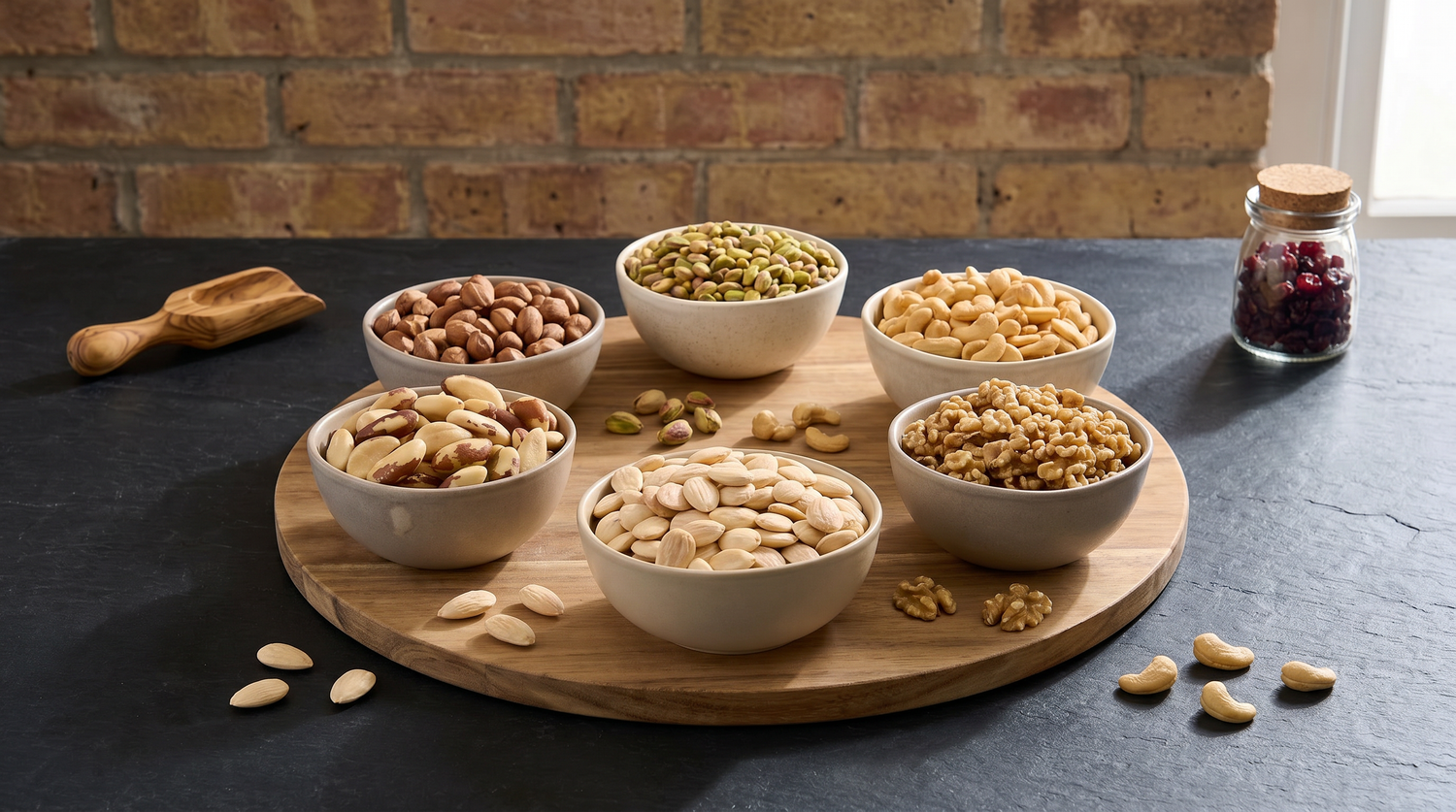
1. Walnuts: ~47.2 g/100 g
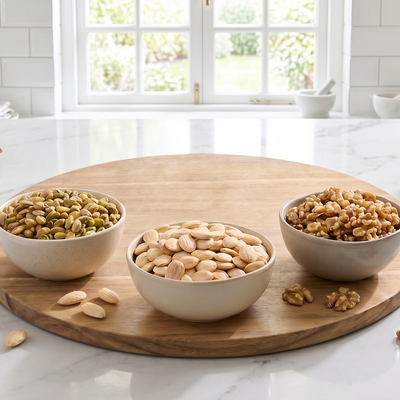
Walnuts are the absolute, undisputed leader. With 47.2 g of polyunsaturated fats per 100 grams, they practically double the runner-up. Most of it corresponds to linoleic acid (omega-6) and ALA (omega-3), with an omega-6/omega-3 ratio of approximately 4:1 — the most favourable of all nuts and exactly the one health bodies point to as optimal.
2. Pine nuts: ~34.1 g/100 g
Pine nuts come in second with 34.1 g, although their profile is predominantly omega-6 (linoleic acid and pinolenic acid). As a complement to other nuts with more omega-3, they make a lot of sense within a varied diet and also provide iron and vitamin K.
3. Brazil nut: ~20.6 g/100 g
The Brazil nut combines its 20.6 g of polyunsaturated fats with the highest natural selenium content known in food. This mineral is an essential cofactor of the antioxidant system, which creates a particularly powerful synergy with anti-inflammatory fatty acids. As we also saw in the article on methionine in nuts, the Brazil nut is a hard-to-match complement in one or two pieces a day.
4. Peanuts: ~15.6 g/100 g
Peanuts have a solid polyunsaturated content, mainly omega-6, combined with the highest protein contribution among nuts. They are a very practical option for those looking for high nutritional density and satiety in a single compact source.
5. Pistachios: ~14.4 g/100 g
Pistachios have a moderate polyunsaturated content, but their position in this ranking doesn’t do justice to their full profile. With protein, fibre, potassium, vitamin B6 and carotenoid antioxidants such as lutein, Pistachios are perhaps the nut with the greatest nutritional diversity per calorie. Their balance between mono- and polyunsaturated fats makes them one of the smartest snacks you can choose.
6. Almonds: ~12.3 g/100 g
Almonds have a profile more oriented towards monounsaturated fats, but they also provide a relevant amount of polyunsaturated fats, mainly linoleic acid. They are an excellent complement to walnuts for diversifying the profile within a mix.
7. Hazelnuts: ~7.9 g/100 g
Hazelnuts shine much more in monounsaturated than in polyunsaturated fats. Here they come second to last, but their richness in vitamin E makes them especially interesting as protectors of the polyunsaturated fats of the other nuts you combine them with: vitamin E acts as a lipid antioxidant and preserves those more reactive fatty acids.
8. Cashews: ~7.8 g/100 g
Cashews have a profile similar to hazelnuts in polyunsaturated fats. Their differential value lies more in monounsaturated fats and in the iron and zinc they provide, nutrients relevant to immune function and recovery.
9. Macadamia: ~1.5 g/100 g
The macadamia closes the ranking with very little polyunsaturated fat, since almost all of its fat is monounsaturated. It is the clearest example that different nuts have different and complementary profiles, and that the key isn’t choosing one but rotating and combining them according to what you want to optimise.
The omega-6/omega-3 ratio: why balance matters more than quantity
It’s not enough to consume a lot of polyunsaturated fats; the ratio between omega-3 and omega-6 is what determines whether the net effect is anti-inflammatory or pro-inflammatory. Most people in Western countries consume too much omega-6 through refined vegetable oils, pastries and processed snacks, and too little omega-3.
Walnuts are the simplest and most effective dietary tool for improving that balance within the world of nuts. Prioritising walnuts in your usual portions, together with reducing sunflower or corn oil in cooking in favour of olive oil, can significantly change the omega-6/omega-3 ratio of your diet in just a few weeks.
How to incorporate polyunsaturated fats into your routine
Breakfast: walnuts with yoghurt and fruit. The ALA in walnuts combines with the probiotics in yoghurt for a breakfast with anti-inflammatory and microbiota benefits that starts the day in the best possible state.
Snack: pistachios mid-morning. Their polyunsaturated content is moderate but their overall nutrient profile makes them one of the most satiating and complete snacks you can carry with you.
Lunch: pine nuts over salad or pasta. They add texture, flavour and an extra dose of polyunsaturated fats that enriches the dish’s nutritional profile with very little added volume.
Post-workout: walnuts with banana. The potassium in the banana and the anti-inflammatory fats in walnuts form a particularly effective recovery duo. If you want to maximise muscle recovery, combine it with what you learn in the article on BCAAs in nuts.
Dinner: brazil nut on their own or with cashews. Light but dense in micronutrients. The selenium in the Brazil nut and the polyunsaturated fats in both work together with the repair processes that take place during sleep.
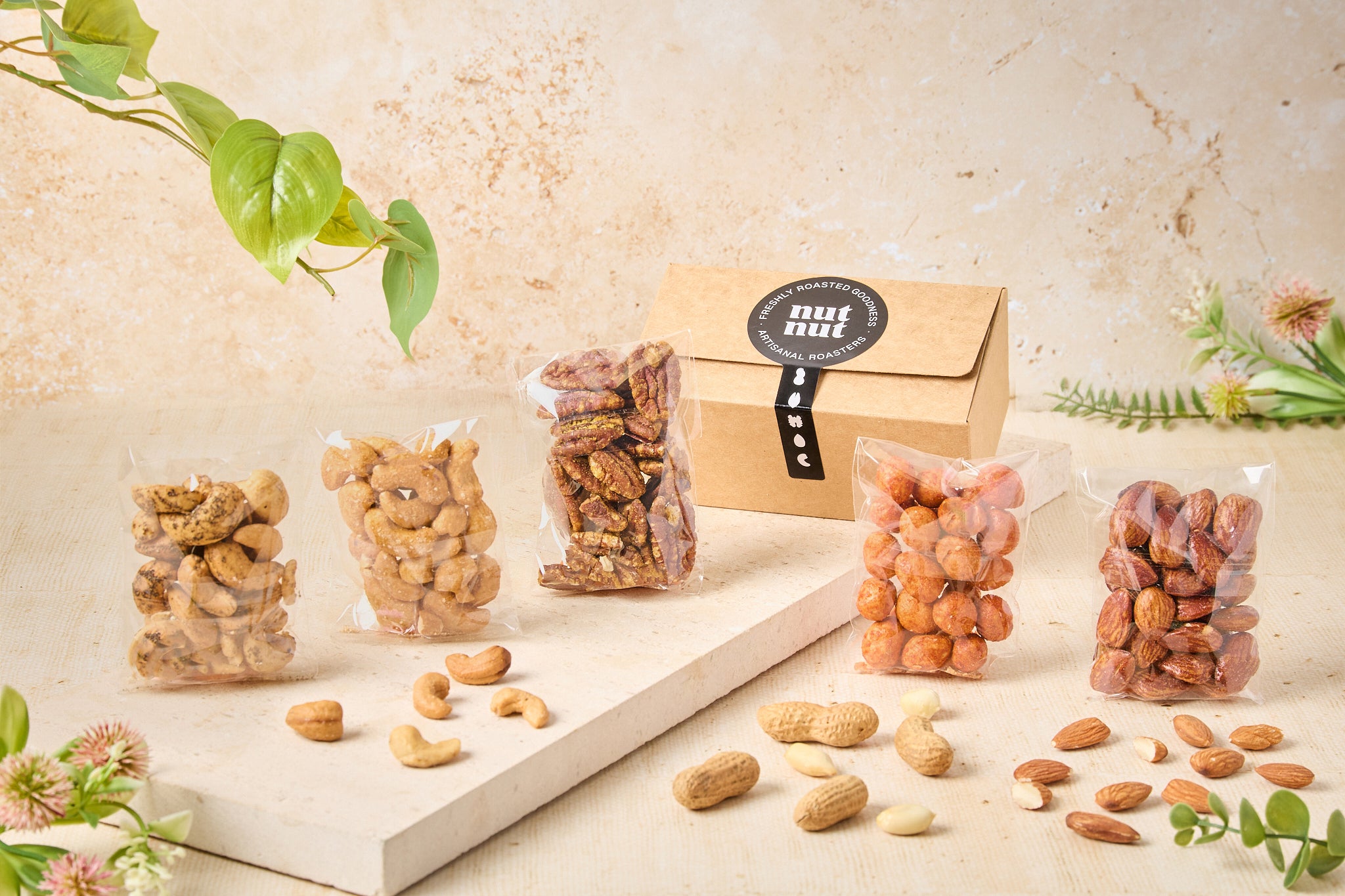
At nutnut we roast each batch with special care over temperature and time, because polyunsaturated fats are sensitive to heat. A well-executed artisanal roast preserves those essential fatty acids that make a nut much more than a snack.


Leave a comment
This site is protected by hCaptcha and the hCaptcha Privacy Policy and Terms of Service apply.