


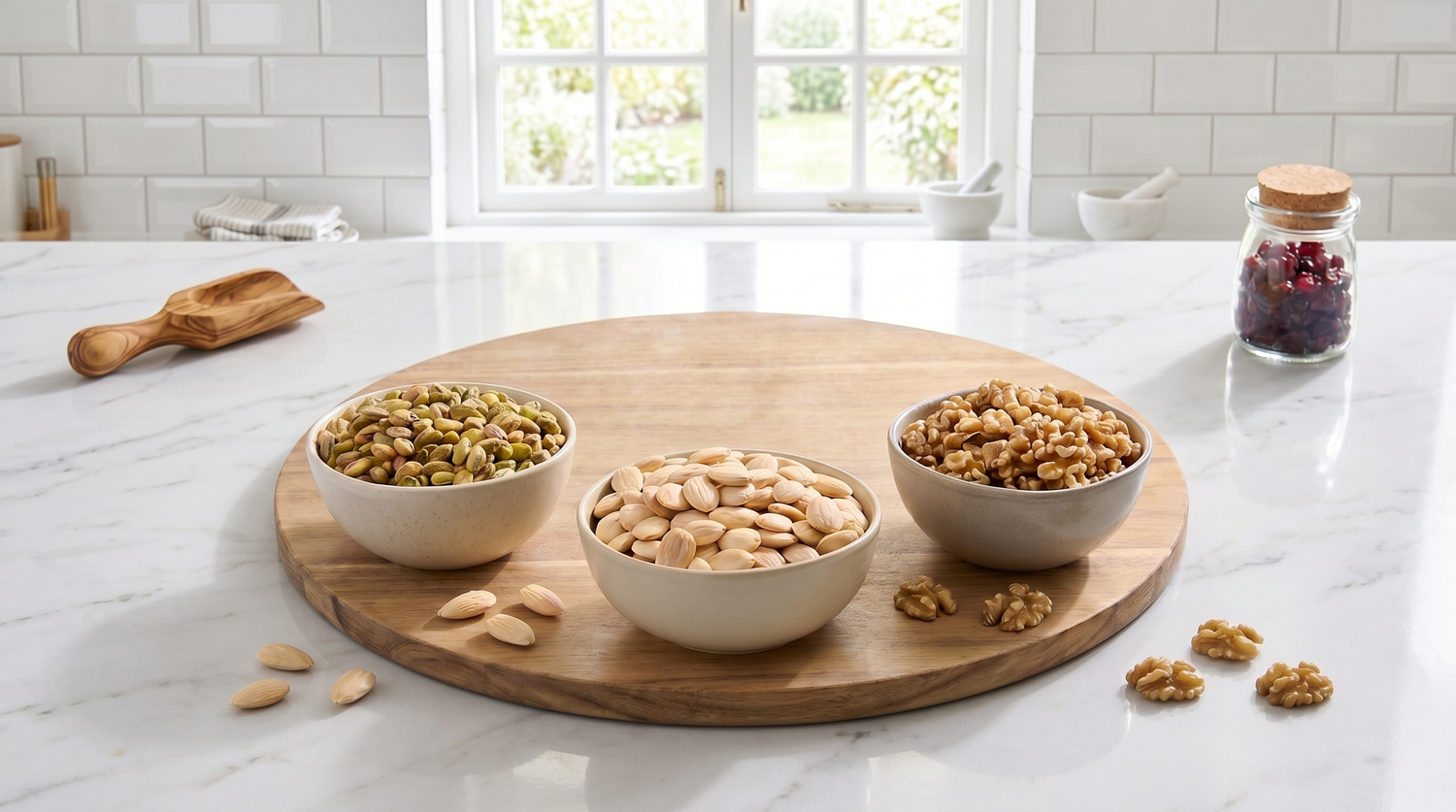
If you’ve ever heard that olive oil is good for your heart, you already have a clue about what monounsaturated fats are: oleic acid, their best-known member, is exactly the type of fat that makes extra virgin olive oil one of the pillars of the Mediterranean diet. But nuts — and macadamias and hazelnuts in particular — contain amounts of oleic acid that even surpass olive oil per gram of product.
Monounsaturated fats are part of the larger family of unsaturated fats. If you want to understand the full picture (including the difference with polyunsaturated fats and why both are preferable to saturated ones), this article gives you the general context. Here we focus on the specifics: what monounsaturated fats do in your body, how much of them each nut contains and how to make the most of them depending on the time of day.
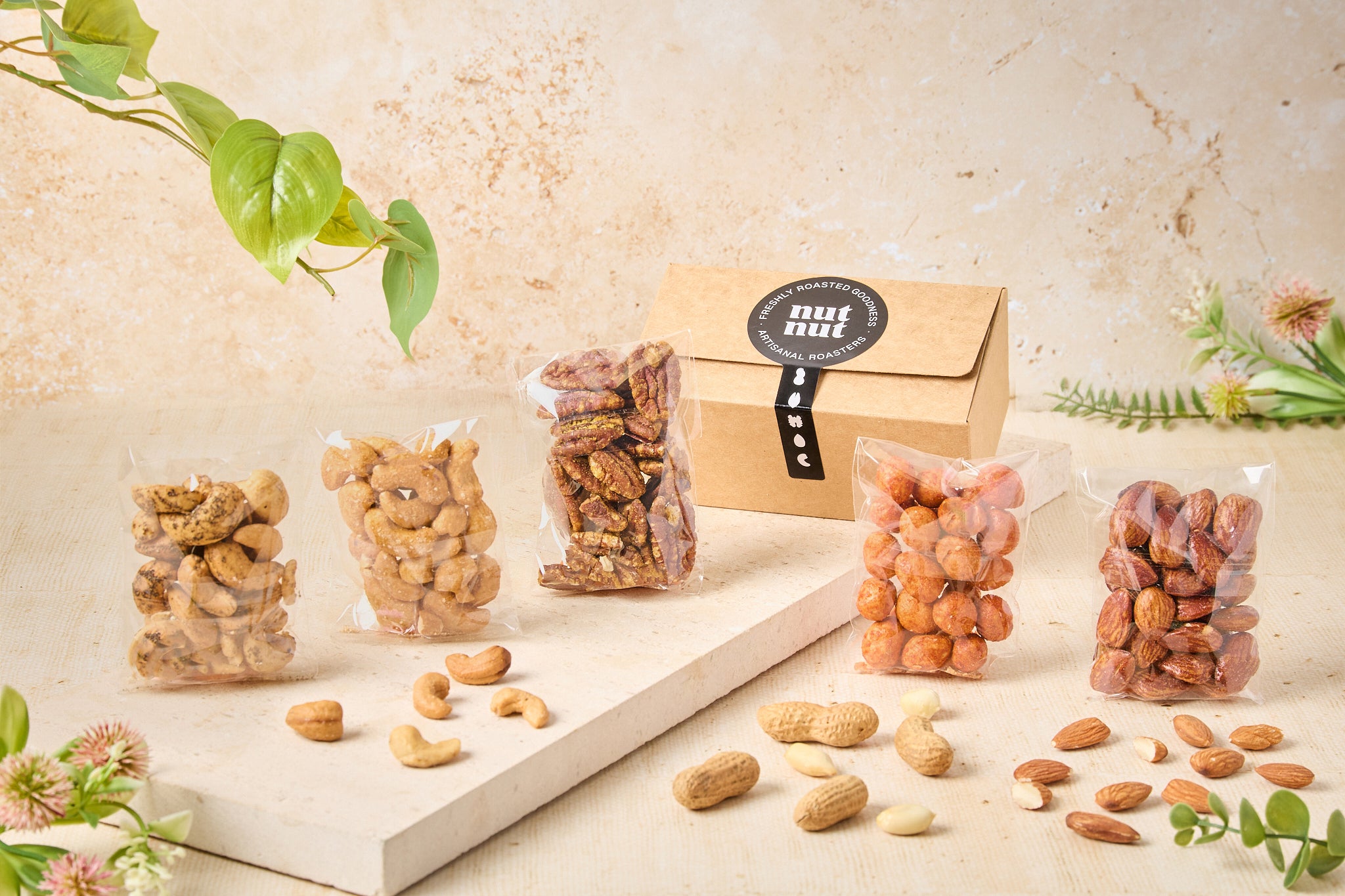
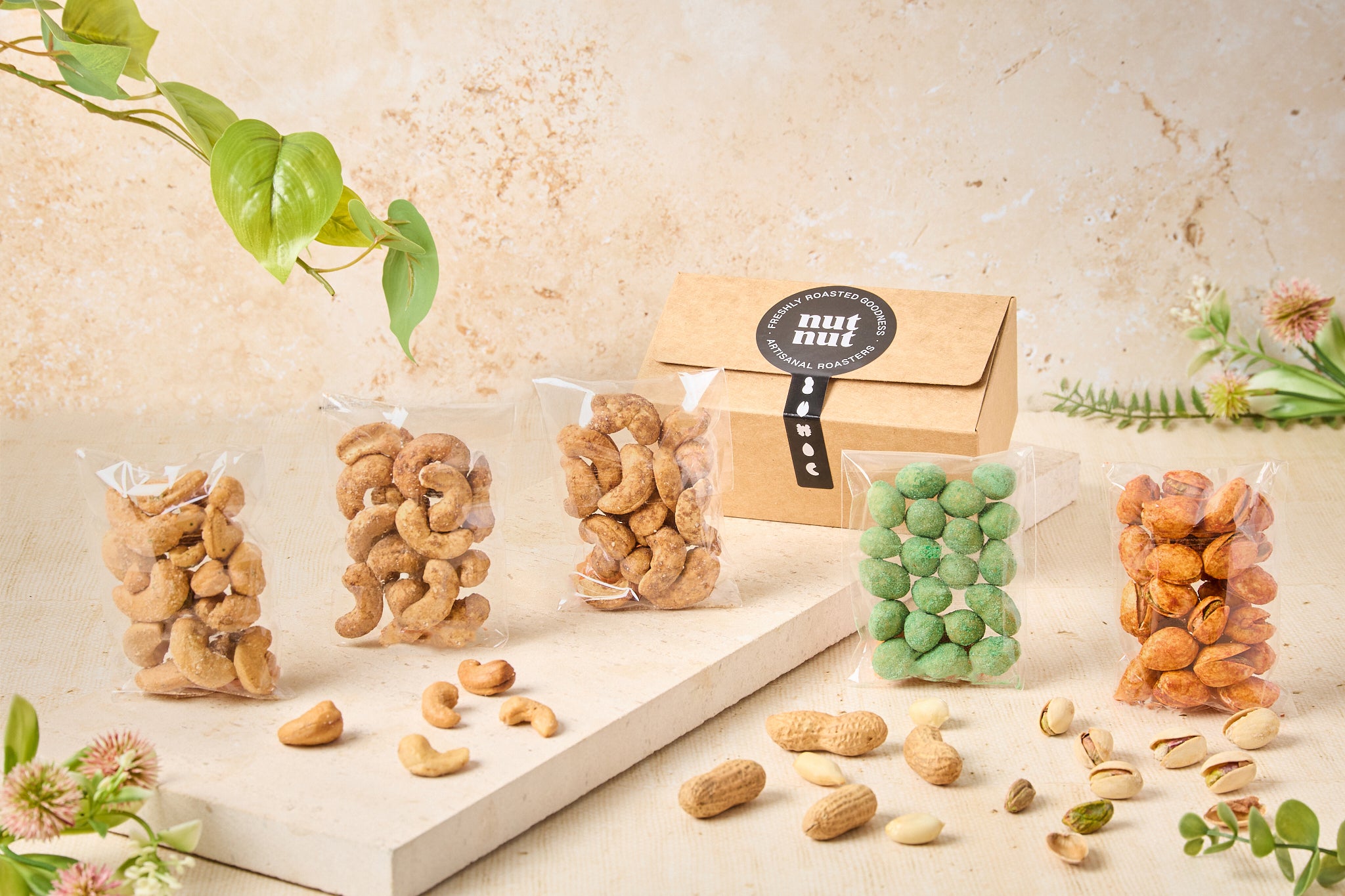
At nutnut, the macadamia is probably the purest example of a monounsaturated nut. But there are several equally interesting options worth knowing and rotating to get the most out of this group of fats, which is so well supported by scientific evidence.
What monounsaturated fats are
A monounsaturated fat is a fatty acid with a single double bond in its carbon chain. That one detail — just one — sets them apart from polyunsaturated fats (which have two or more) and from saturated fats (which have none). They are liquid at room temperature but solidify when cold, which explains why olive oil turns cloudy in the fridge.
Oleic acid (omega-9) is by far the most abundant monounsaturated fat in nature and the most studied. There is also palmitoleic acid, present in small amounts in some nuts, with its own anti-inflammatory properties recognised in recent research.
Unlike omega-3 and omega-6 fatty acids (which are essential and the body cannot make), the body can synthesise monounsaturated fats to a certain extent. Even so, getting them directly from the diet in adequate amounts produces benefits that endogenous synthesis cannot fully cover.
Benefits of monounsaturated fats
Improving cholesterol with precision
Monounsaturated fats reduce oxidised LDL cholesterol (the most dangerous fraction of “bad” cholesterol) without lowering HDL. That selectivity is key: many dietary interventions that lower LDL also reduce HDL, which cancels out part of the benefit. Monounsaturated fats don’t do this.
Blood pressure and vascular health
Regular consumption of these fats is associated with reductions of 2 to 4 mmHg in systolic blood pressure in studies on the Mediterranean diet. Those figures may seem small, but over the years they add up to a very significant reduction in long-term cardiovascular risk.
Glycaemic control and steady energy
Monounsaturated fats slow gastric emptying and carbohydrate absorption, which translates into lower insulin spikes and steadier energy throughout the day. For those who practise endurance sports, this effect is especially relevant for maintaining performance during prolonged efforts.
Neurological function and myelin protection
Myelin, the protective sheath that coats neurons, has a composition rich in oleic acid. A diet adequate in monounsaturated fats helps maintain that structure, which is associated in observational studies with less cognitive decline. This aspect connects with the role essential amino acids play in neurological health, developed in the article on leucine in nuts.
Anti-inflammatory effect
Nuts rich in oleic acid take part in an anti-inflammatory mechanism that shares molecular bases with that of extra virgin olive oil. It isn’t the most powerful anti-inflammatory in the plant world — that title goes to omega-3s — but it is the easiest to incorporate in large amounts without altering the flavour of dishes.
Monounsaturated fats in nuts: ranking per 100 g
1. Macadamia: ~58.9 g/100 g
The macadamia is, by a wide margin, the nut with the highest monounsaturated fat content: almost 59% of its weight is made up of fatty acids of this type, with oleic acid as the absolute protagonist. Its profile is closer to olive oil than to any other nut. If you’re looking for a concentrated and delicious source of monounsaturated fats, it’s hard to beat.
2. Hazelnuts: ~45.7 g/100 g
Hazelnuts are the second richest nut in monounsaturated fats. Their combination of oleic acid with vitamin E, which protects those very fats from oxidation, creates a nutritional synergy that is especially favourable for cardiovascular health. They are also one of the nuts with the best antioxidant profile per calorie.
3. Almonds: ~31.6 g/100 g
Almonds are probably the most consumed monounsaturated nut in Spain. With more than 31 g of monounsaturated fats per 100 g, plus more magnesium, calcium and vitamin E than almost any other nut, they are a hard option to beat in terms of the quality-to-nutrition ratio within the category.
4. Peanuts: ~24.7 g/100 g
Peanuts combine a solid monounsaturated content with the highest protein concentration among nuts. They are especially efficient during maintenance or muscle-building phases, where protein and quality fat work together to maintain satiety and protect muscle tissue.
5. Cashews: ~24.0 g/100 g
Cashews have a monounsaturated fat profile similar to peanuts but with a milder flavour and a creamier texture. They are ideal as a base for vegetable sauces and blends that seek nutritional density without added saturated fat.
6. Pistachios: ~23.8 g/100 g
Pistachios have a monounsaturated content practically identical to cashews, but their real differential value lies in the breadth of their profile: they provide potassium, vitamin B6, lutein and zeaxanthin in relevant amounts, making them one of the most nutritionally versatile nuts. Their presence in this ranking confirms that they are exceptional not only in micronutrients but also in their healthy fat profile.
7. Pine nuts: ~19.0 g/100 g
Pine nuts don’t lead in monounsaturated fats, but they have an interesting combination: their main fat contribution is polyunsaturated, which makes them a nut that is especially useful for diversifying the unsaturated profile within a single blend.
8. Brazil nut: ~13.1 g/100 g
The Brazil nut has a moderate monounsaturated content, but its combination with selenium and methionine makes it unique in terms of antioxidant and liver benefits. In small amounts (2–3 units) it already provides a significant dose of selenium that complements the healthy fat profile of any mix.
9. Walnuts: ~8.9 g/100 g
Walnuts close this monounsaturated ranking, but they lead in polyunsaturated fats, especially omega-3, as you’ll see in the article on polyunsaturated fats. They are nuts with complementary, not competing, profiles: combining them is the smartest strategy.
How much you need per day
There is no dose set specifically for monounsaturated fats, but Mediterranean diet guidelines suggest that between 15% and 20% of total calories should come from this type of fat. In a 2,000 kcal diet, that’s equivalent to about 33–44 grams of monounsaturated fats per day.
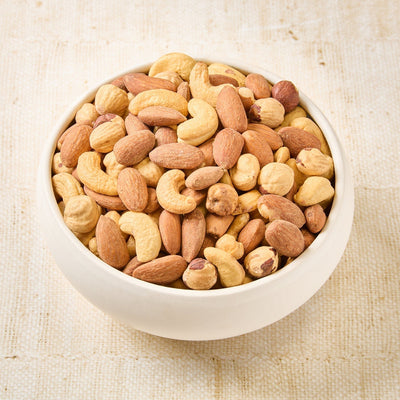
A handful of almonds (30 g) provides about 9.5 g of monounsaturated fats. One of macadamias (30 g), about 17.7 g. With two handfuls of mixed nuts a day, plus the olive oil from cooking, you reach that range easily without having to calculate anything.
How to incorporate monounsaturated fats into your routine
Breakfast: hazelnuts or almonds over yoghurt or granola. Their oleic acid content slows digestion and keeps you full longer than a breakfast of carbohydrates alone.
Snack: pistachios on their own or together with a couple of macadamias. Lots of nutritional density, an excellent monounsaturated profile and one of the most satiating combos you can choose.
Lunch: cashews in sauces or stir-fries. They blend easily into Asian and Mediterranean cooking, and add creaminess without needing to add dairy or refined oils.
Post-workout: almonds with fresh fruit. The monounsaturated fat moderates the glycaemic index of the whole snack and prolongs the recovery window. Combine it with a protein source to maximise protein synthesis, as we develop in the article on lysine in nuts.
Dinner: a small handful of Brazil nuts or almonds to close the day. Light, nutritious and very different from the ultra-processed last-minute snack that usually ends the day.
nutnut’s nuts are roasted in small batches, with no added oils or additives, so that the monounsaturated fats they contain reach you in their best state. That artisanal roasting makes the difference both in flavour and in the final nutritional profile.


Leave a comment
This site is protected by hCaptcha and the hCaptcha Privacy Policy and Terms of Service apply.